
The LendingClub name changed
LendingClub Bank officially became Happen Bank on June 22, 2026. Its parent became Happen, Inc. and began trading on Nasdaq under ticker HAPN. The public LendingClub personal-loan URL now redirects to Happen.
DollarScout keeps /loans/reviews/lendingclub/ as the canonical legacy route so existing borrowers, old links, and people researching the former brand reach the correct explanation. The rates, amount range, application, and CTA in this review refer to the current Happen Bank product.
| Review question | DollarScout finding |
|---|---|
| Current brand | Happen Bank, formerly LendingClub |
| Personal-loan range | $1,000 to $75,000 |
| Published fixed APR | 5.96% to 35.99% |
| Origination fee | 0% to 8%, generally deducted from proceeds |
| Key use case | Debt consolidation with optional direct creditor payment |
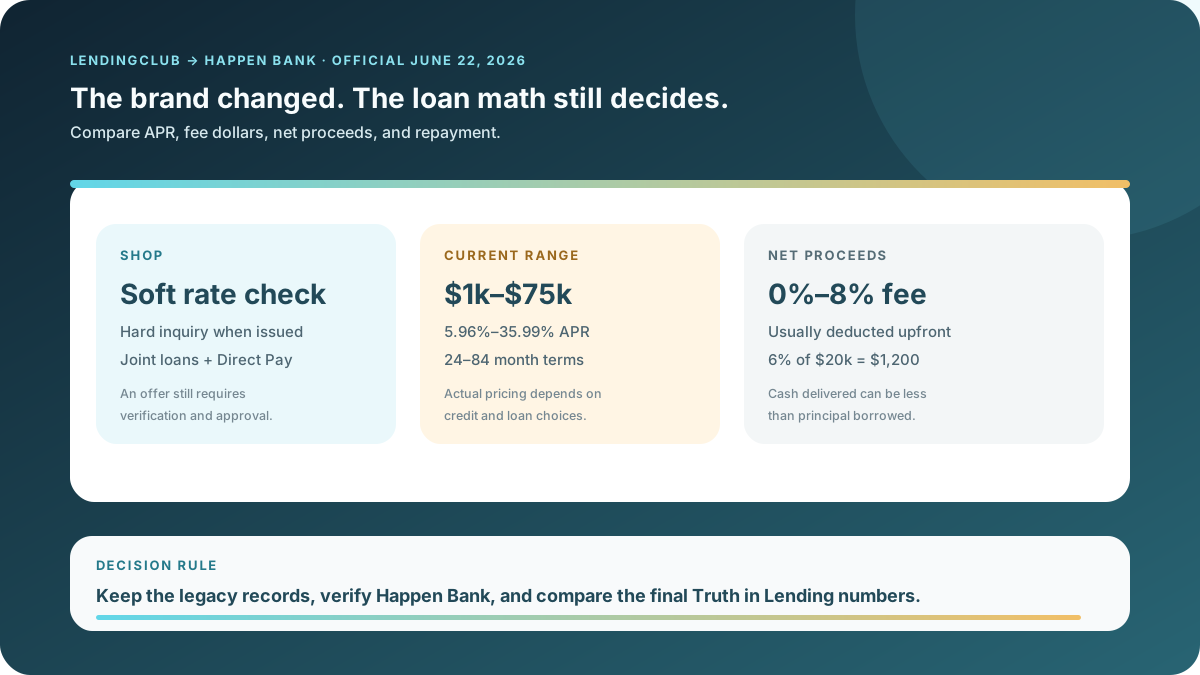
APR and current loan range
APR scores 4.0/5. Happen’s current disclosure lists 5.96% to 35.99% fixed APR. Loan amounts range from $1,000 to $75,000 and terms from 24 to 84 months. The published rate disclosure was valid from June 1, 2026 and can change.
The lowest APR is not a general offer. Happen considers credit score, credit history, debt-to-income ratio, loan amount, term, usage, and other underwriting information. Some amounts, terms, and products are unavailable in particular states or channels, and funding can depend on investor commitment.
A fixed APR keeps the contractual rate and scheduled payment stable after funding, but interest still accrues over time. A longer term normally lowers the payment and raises total interest. Compare at least two offers using the same requested net cash and a similar term.
Happen’s Q2 2026 debt-consolidation disclosure reported an average 18.40% APR, 6% origination fee, $15,262 principal, and 36-month term for a specified historical group. That is context, not a prediction. An applicant’s offer can be lower, higher, or unavailable.
Origination fee and net proceeds
Fees scores 3.5/5. Happen says most personal loans carry an origination fee from 0% to 8%, based in part on credit history. The fee is disclosed on the offer and Truth in Lending statement and usually reduces the money delivered.
For a $20,000 principal:
| Origination fee | Fee dollars | Approximate net proceeds |
|---|---|---|
| 0% | $0 | $20,000 |
| 4% | $800 | $19,200 |
| 6% | $1,200 | $18,800 |
| 8% | $1,600 | $18,400 |
If the borrower needs exactly $20,000 to pay creditors, a 6% fee means requesting more than $20,000, assuming the higher request is approved. Do not compare only interest rates: APR incorporates the origination cost, while net proceeds show whether the loan solves the cash need.
Happen says there is no application, brokerage, or prepayment fee. Payments more than 15 days late can trigger a late fee or other penalty under the agreement. Returned-payment terms can also apply. Review the final promissory note because it controls over the marketing page.
Soft-pull rate check and hard inquiry
Funding Speed scores 4.5/5. Checking a rate uses a soft inquiry and does not affect the credit score. Happen’s authorization says an applicant may see more than one soft inquiry when service providers or investors participate.
A hard inquiry appears if and when the loan is issued and can affect the score. Submitting the rate form is not approval, and a displayed offer can still depend on identity, income, employment, bank, or other document verification.
Use the soft-pull stage to compare loan amount, APR, interest rate, term, monthly payment, fee, and net proceeds. Avoid applying for a larger amount merely because it is available. The payment must fit a budget under realistic income and expense assumptions.
Approval and funding timing
Happen reported that 64% of personal loans approved for funding on a given business day from January through March 2026 were disbursed within 24 hours. That statistic begins after approval for funding, not when the applicant first checks a rate.
Funding can slow when documents, identity, income, employment, bank ownership, creditor details, or investor commitment require review. Weekends, holidays, and the receiving bank also matter.
For an urgent expense, keep a fallback. A conditional offer is not cash until funds arrive, and a lender should never ask for an advance fee to “unlock” a loan. Happen deducts a disclosed origination fee from funded proceeds; it does not require a gift card, crypto payment, or wire to release funds.
Direct Pay for debt consolidation
Happen can send funded amounts directly to creditors and deposit any remainder in the borrower’s bank account. This reduces the operational risk that consolidation proceeds are spent elsewhere before card balances are cleared.
Confirm every creditor account number, payoff amount, and posting date. Continue making required payments until the creditor shows the balance as received; a pending Happen payment does not suspend the original obligation.
Debt consolidation only improves the balance sheet if the borrower stops rebuilding revolving balances. Closing every card can affect utilization and account age, while keeping all cards open can recreate debt. Create a post-consolidation spending rule before funding.
Joint applications
Happen supports joint personal-loan applications. A co-borrower’s income and credit can improve approval, amount, or pricing, but both borrowers become legally responsible for the full debt.
The borrower agreement uses joint and several liability: the lender can pursue either responsible party for all amounts due. Missed payments can be reported in both names. A co-borrower is not a character reference; it is a second debtor.
Before signing jointly, document who receives the proceeds, who pays, which bank funds autopay, what happens after separation, and how both parties access statements. A private agreement between borrowers does not remove the bank’s contractual rights.
Eligibility and use restrictions
Applicants must satisfy age, residency, identity, bank-account, credit, and ability-to-repay requirements. The current product states that personal-loan proceeds cannot fund post-secondary education, securities or crypto investment, illegal activity, or other prohibited uses.
Credit eligibility is not guaranteed. Happen can request pay stubs, bank records, tax authorization, or employment confirmation and can decline or cancel before funding if information cannot be verified or credit conditions change.
Use the loan for the selected purpose and keep supporting records. Misrepresentation can constitute default under the borrower agreement.
Payments, prepayment, and due dates
There is no prepayment penalty. Happen’s servicing help explains how to make an extra principal payment or request a payoff. The payoff quote includes principal and accrued interest and can take several business days to process.
A customer in good standing can request certain one-time or permanent due-date changes. Moving a date later can increase interest because the fixed-rate loan accrues interest daily. A partial early payment does not automatically replace the next scheduled payment unless the servicing instructions say so.
Save every confirmation and verify that extra money was applied to principal. After payoff, retain the zero-balance letter and monitor credit reports; Happen says reporting a payoff can take up to 60 days.
Customer service after the rebrand
Customer Service scores 4.1/5. Happen maintains an online Member Center, payment email and phone channels, a detailed help center, and servicing instructions. The new name appears in payment addresses and communications, while historical documents may still say LendingClub.
The rebrand itself does not mean a borrower should send money to an unsolicited new account. Follow the authenticated Member Center and official transition notices. Treat unexpected calls, changed wire instructions, or advance-payment requests as possible fraud.
DollarScout did not test an application, document review, hardship request, dispute, or payoff call. Save the original LendingClub/Happen note, Truth in Lending disclosure, payment history, fee, direct-pay confirmations, and rebrand communications.
Happen versus alternatives
Choose LightStream when you have good-to-excellent credit, need $5,000 or more, and can obtain a fee-free offer after a full application. Choose SoFi for soft-pull comparison, high limits, member features, and optional fee structures. Choose Upstart when alternative underwriting inputs may help, while carefully comparing its possible fee.
Happen is particularly competitive when Direct Pay, a joint application, a $1,000 minimum, or the $75,000 ceiling fits the need. Its origination fee is the primary reason to keep shopping.
Build a comparison sheet before selecting an offer. Put each lender on one row and record the same cash delivered, term, APR, interest rate, origination fee, scheduled payment, total repayment, funding method, creditor-payment method, and hardship contact. If one lender quotes $20,000 principal with a 6% fee and another delivers $20,000 with no fee, their headline principals are not comparable. Normalize the proceeds first, then compare APR and total dollars. Keep the sheet with the Truth in Lending disclosure so the final contract can be checked against the rate-shopping screen.
Who Happen Bank is best for
Happen fits borrowers who:
- Want to compare a fixed offer with a soft inquiry.
- Need $1,000 to $75,000 over 24 to 84 months.
- Value direct creditor payment for consolidation.
- Can benefit from a joint application.
- Compare net proceeds and APR after the fee.
It is weaker for applicants who qualify for a lower fee-free APR, need guaranteed same-day cash, want post-secondary education financing, or would use consolidation to reopen revolving debt.
Bottom line
The current product earns 4.1/5. Happen preserved the useful LendingClub workflow and expanded the stated maximum to $75,000. Soft-pull comparison, Direct Pay, joint applications, and mature servicing are meaningful strengths.
The 0% to 8% fee can materially reduce cash received. Ignore the old logo, calculate the new offer: required proceeds, APR, fee dollars, monthly payment, total repayment, and the date every creditor will be paid.