Chase Sapphire Preferred at a glance
Chase Sapphire Preferred is a mid-tier travel rewards card built around Ultimate Rewards points. Its permanent value is a combination of broad bonus categories, airline and hotel transfers, travel protections, a Chase Travel portal, and a manageable $95 annual fee. The product changed substantially on June 15, 2026, so older reviews that still describe a $50 hotel credit, a 10% anniversary bonus for every new applicant, or the former Hyatt transfer economics are stale.
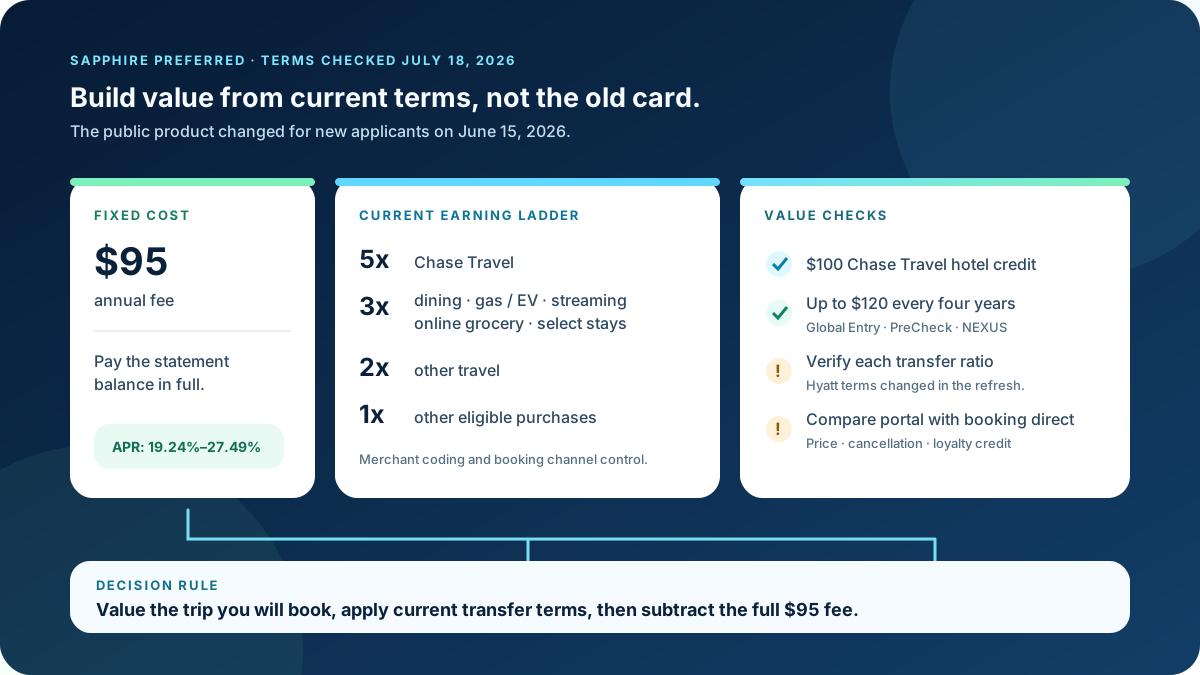
The current card earns 5x through Chase Travel; 3x on dining, gas stations, EV charging, select vacation-home brands, eligible streaming, and online grocery; 2x on other travel; and 1x elsewhere. The first $100 of qualifying hotel purchases through Chase Travel each account year receives an automatic statement credit but does not earn points. New and existing cardmembers also receive up to $120 every four years toward the first eligible Global Entry, TSA PreCheck, or NEXUS application fee charged to the card.
| Review question | DollarScout finding |
|---|---|
| Best for | Travelers who want transferable points, useful protections, and a moderate annual fee |
| Annual fee | $95 |
| Current purchase APR | 19.24%–27.49% variable |
| Main strength | Connected rewards, transfers, hotel credit, and travel coverage |
| Main risk | Portal and partner terms change; interest can overwhelm reward value |
What changed in June 2026
Chase kept the annual fee at $95 but rebuilt much of the proposition. The annual Chase Travel hotel credit rose from $50 to $100. Gas stations, EV charging, and vacation homes booked directly with specified brands moved into a 3x group. The trusted-traveler application credit was added, and Chase announced new emergency-evacuation coverage within the protection package.
There were offsets. The 10% anniversary points bonus was discontinued for cardmembers applying on or after June 15, 2026. The World of Hyatt transfer ratio for that group became 4 Ultimate Rewards points to 3 Hyatt points; earlier cardmembers transition under the timeline in Chase's announcement. That is materially different from assuming every travel partner always receives a one-to-one transfer.
The update shows why card reviews need dates. The same plastic can have different economics for two applicants depending on when the account opened. Existing cardmembers should read their account communication, while new applicants should use the current offer and rewards agreement rather than an old benefits table.
Earning rewards
Rewards scores 4.9/5 because the category map now covers travel, dining, fuel, streaming, online groceries, and selected vacation homes without requiring quarterly activation. Chase Travel purchases earn 5x. Direct travel outside the portal generally earns 2x, and dining worldwide—including eligible takeout and delivery—earns 3x.
The new 3x gas and EV categories improve everyday usefulness. Vacation-home earning is narrower: Chase names selected direct-booking brands, while a vacation rental booked through Chase Travel follows the portal category. Online grocery excludes Target, Walmart, and wholesale clubs. Merchant category codes and payment intermediaries can prevent a transaction from earning the expected rate.
The first $100 of eligible Chase Travel hotel spend each account year is absorbed by the hotel credit and does not earn points. That is reasonable but easy to miss in a spreadsheet. Returns, cash advances, balance transfers, fees, person-to-person funding, cash-like transactions, and other excluded activity also do not earn rewards or count toward a welcome-offer threshold.
The $100 hotel credit
Fees scores 4.7/5. The annual fee is $95 and the hotel credit can reach $100, but the two are not equivalent for everyone. The credit applies automatically to qualifying hotel accommodations purchased through Chase Travel during the account-anniversary year. It is not cash, does not apply to a hotel booked directly, and can be reversed after a return, cancellation, modification, default, or certain account closures.
A traveler who would otherwise book at least $100 of competitively priced portal hotel inventory can recover the fee before valuing points or protections. Someone who prefers direct hotel status benefits, negotiated rates, vacation rentals outside eligible channels, or no hotel stays should assign less value. Compare the final portal price and cancellation terms with the direct booking; a statement credit does not make an overpriced or inflexible room cheaper.
Current welcome offer and eligibility
The public page checked July 18, 2026 advertises a limited 100,000-point bonus after $5,000 in purchases during the first three months. Chase says offers can vary by channel and change over time. The account must remain open and not in default when the bonus is fulfilled, and excluded cash-like transactions and fees do not satisfy the threshold.
The page also says the card is unavailable when the applicant currently has it open. A new-cardmember bonus may be unavailable to someone who held the card or previously received its bonus, and Chase can consider the number of cards opened and closed. That language is more useful than treating an unofficial application rule as guaranteed approval. Apply only when the disclosed spend fits an existing budget; manufacturing $5,000 of unnecessary purchases converts a bonus into a loss.
Redeeming and transferring points
Ultimate Rewards can be redeemed for cash, gift cards, travel, pay-with-points options, and transfers. Values vary. Points Boost can increase value on selected Chase Travel hotels or flights, but it is not a universal fixed rate for every portal booking. Transfer partners may produce strong value when award inventory exists; they can also produce less value after a transfer-ratio change, a loyalty-program devaluation, or an unavailable award.
Transfers are generally one-way. Compare the cash price, portal point requirement, partner point requirement, taxes, fees, cancellation rules, and points that would have been earned on a paid booking before moving points. The June 2026 Hyatt change is a direct warning against assuming every published points valuation will survive for the life of the card.
Points do not expire while the account remains open and in good standing under current terms. They can be lost after program misuse, fraud, or account closure in circumstances described by Chase. A cardholder planning to close should review permitted point-combination or redemption choices before acting.
APR and the cost of carrying a balance
APR scores 3.6/5. The current purchase range is 19.24%–27.49% variable, assigned according to creditworthiness and capable of moving with the benchmark described in the agreement. This is a rewards card, not a low-cost borrowing product.
The CFPB explains that a card with a purchase grace period can generally avoid interest when the full statement balance is paid by the due date and no balance is carried. Once the grace period is lost, new purchases can begin accruing interest under the agreement. Even one month of interest on a large balance can exceed the value of 2x or 3x points.
Set automatic payment for at least the minimum to protect payment history, but budget to pay the statement balance in full. If financing is necessary, compare a card designed for a genuine introductory purchase APR rather than using the value of a bonus to rationalize a 19%–27% rate.
Travel and purchase protections
Benefits scores 4.9/5. The current Guide to Benefits describes primary auto-rental collision coverage when the rental company's collision option is declined and the eligible rental is charged to the card, subject to vehicle, country, amount, and other exclusions. The public page also describes trip cancellation and interruption coverage, baggage delay, trip delay, travel accident coverage, purchase protection, and emergency evacuation and transportation.
Coverage is not automatic travel insurance for every loss. The trip, fare, or rental must satisfy the payment and eligibility rules; covered reasons, relatives, trip length, documentation, notice deadlines, dollar limits, and exclusions matter. Medical treatment itself is different from emergency transportation. Download the current guide before a trip and save receipts, carrier notices, rental documents, and proof of payment.
Temporary partner benefits
The card currently advertises one year of Apple TV when activated by December 31, 2026; a complimentary DashPass period and monthly nonrestaurant DoorDash promotion under stated activation and end dates; 5x Lyft through September 30, 2027; and 5x on qualifying Peloton equipment and accessories through December 31, 2027.
These benefits can be useful, but they should not justify a multi-year card decision at full face value. They expire, have purchase minimums or merchant restrictions, and may duplicate subscriptions already held. Our score treats them as incremental rather than permanent value.
Customer service and account management
Customer Service scores 4.4/5. Chase provides app, web, secure-message, and phone account channels and publishes extensive rewards and benefit documentation. We did not call support, submit a travel claim, dispute a merchant category, or measure resolution time, so the score reflects documented access and self-service depth rather than a response-time test.
A rewards question, portal booking issue, insurance claim, and airline-transfer problem may involve different organizations. Record confirmation numbers and know which party controls the transaction. Chase can explain the card, but a transfer partner controls its award inventory and a benefits administrator applies the insurance guide.
Chase Sapphire Preferred versus alternatives
Choose American Express Gold when restaurant and U.S. supermarket spending is much larger and the household can naturally use several merchant-specific credits. Choose Capital One Venture when a flat 2x rate on nearly every purchase and simpler travel eraser or transfer options matter more than category optimization and stronger trip protections.
Use a no-annual-fee cash-back card when travel transfers will not be researched, portal credits would force a different booking, or balances may be carried. Sapphire Preferred is strongest as a deliberate travel system, not as a status symbol or generic first credit card.
Decision checklist
The card is a strong candidate when you:
- Pay the full statement balance every month.
- Will use at least $95 of the $100 Chase Travel hotel credit without overpaying.
- Have recurring spend in dining, travel, gas, EV charging, streaming, or online groceries.
- Understand current partner transfer ratios before moving points.
- Value the primary rental and trip-protection package and will follow its terms.
It is easier to skip when portal booking is undesirable, the $5,000 bonus threshold would change spending, transfer research feels burdensome, or a 0% introductory APR is more important than travel rewards.
Bottom line
Chase Sapphire Preferred earns 4.6/5. The June 2026 redesign made the $95 card materially stronger: the $100 hotel credit can neutralize the fee for a natural portal user, new 3x categories broaden everyday earning, and the trusted-traveler credit plus travel protections add durable utility.
The tradeoffs are equally real. The 10% anniversary bonus disappeared for new applicants, Hyatt transfers changed, the best welcome offer is temporary, and portal or partner value requires verification. Pay in full, compare booking channels, read the current benefits guide, and value temporary subscriptions at what they replace—not at the number printed in advertising.