Many products on this page are from partners who compensate us. This doesn't influence our ratings. Our opinions are our own.
Debt Consolidation Explained
By Sophie Brown, Senior Finance Editor · Updated Jul 2026 · Fact-checked Jul 18, 2026
Debt consolidation replaces several balances with one new credit product or payment arrangement. It can simplify due dates and sometimes reduce borrowing cost, but a lower monthly payment can hide a longer term, new fees, or collateral risk. Consolidation does not erase debt or repair the spending and income gap that created it. This guide shows how to inventory balances, compare total cost, separate loans from settlement programs, and build a payoff plan that does not recreate the debt.
Key takeaways
- Compare APR, fees, payoff date, total dollars paid, and collateral—not only the new monthly payment.
- A longer term can lower the payment while increasing total interest and keeping the household in debt longer.
- Debt consolidation, nonprofit credit counseling, debt management, and debt settlement are different products with different risks.
- Using home or vehicle equity to repay unsecured debt can put essential property at risk after missed payments.
- Do not close old accounts, send payoff funds, or stop paying creditors until written terms and completed payoffs are verified.
Define the transaction before comparing offers
A debt consolidation loan is new money used to repay separate debts, leaving one new balance. Other products can create one payment without creating the same legal transaction:
- a balance-transfer card moves eligible card balances to another revolving account;
- a nonprofit debt-management plan collects one payment and pays participating creditors under negotiated terms;
- a federal Direct Consolidation Loan combines eligible federal student loans under program rules;
- a debt-settlement company attempts to negotiate less than the amount owed, often after payments stop.
The CFPB warns that settlement, counseling, consolidation, and credit repair are not interchangeable. Ask who lends the money, who owns each debt, whether creditors are paid immediately, and whether the borrower is being told to stop paying.
Build a verified debt inventory
List every balance using current statements, creditor portals, and credit reports. Record:
| Field | Why it matters |
|---|---|
| Current payoff amount | Statement balance may differ from the amount needed to close the debt |
| APR and rate type | Fixed, variable, and promotional rates behave differently |
| Minimum and due date | Reveals cash-flow pressure and late-payment risk |
| Remaining term | Needed to compare the status quo with a new schedule |
| Fees and penalties | Annual, transfer, late, and prepayment charges affect cost |
| Collateral and guarantor | Shows which property or person is exposed |
| Special rights | Federal student, military, medical, or hardship protections can be lost after refinancing |
Separate debts that should not be casually refinanced. Converting federal student loans to private debt can remove federal repayment or forgiveness features. Replacing a pre-service obligation can affect servicemember protections. Rolling disputed debt into a new loan can make the record harder to unwind.
Diagnose why balances grew
Consolidation is unlikely to last if monthly spending still exceeds income. Review the prior six to twelve months and classify the cause:
- one-time emergency with stable current cash flow;
- recurring deficit;
- volatile or interrupted income;
- medical, legal, family, or caregiving event;
- high interest compounding on otherwise controlled spending;
- fraud, billing error, or identity theft;
- unaffordable housing, transportation, or insurance structure.
The solution changes with the cause. A lower APR can help an interest problem. It cannot by itself solve a continuing deficit. Establish a post-consolidation budget and a small reserve so the first new expense does not return to a paid-off card.
Compare the status quo with the new loan
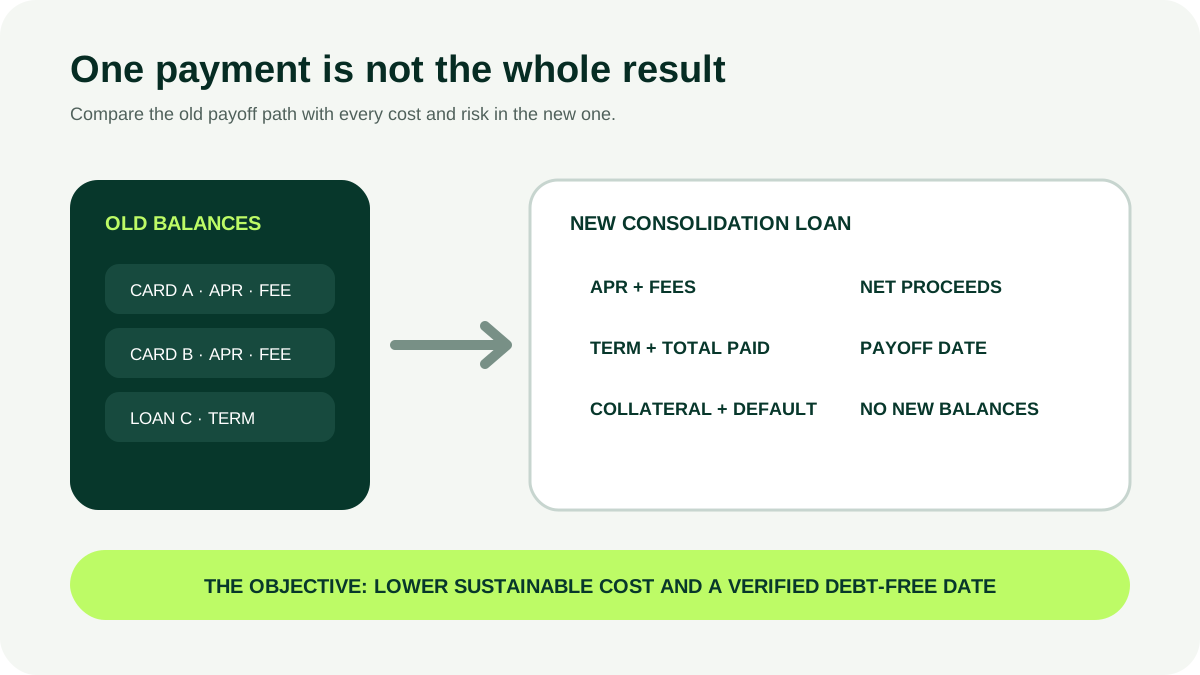
Calculate two complete paths.
Current-debt path: planned payment to each debt, expected payoff month, interest, and fees if no new charges occur.
Consolidation path: amount borrowed, origination charge, net proceeds, APR, payment, number of payments, total of payments, and any cost to close or transfer accounts.
If a lender deducts a 5% origination fee from a $20,000 loan, only $19,000 may reach the borrower even though repayment is based on $20,000. The gap must be funded or some old debt remains.
APR is designed to express interest and certain finance charges as a yearly rate. Compare APRs for loans with the same amount and term, then compare total dollars. A lower APR with a much longer term can still cost more overall.
Stress-test the payment
Use after-tax income and real essential expenses. Test the payment after a plausible reduction in hours, insurance renewal, repair, or seasonal bill. Include automatic-payment discount conditions and what happens if the linked account fails.
Ask whether:
- the rate is fixed for the full term;
- a quoted rate is only a teaser;
- late payment changes the rate or adds fees;
- extra principal payments are allowed and applied correctly;
- there is a prepayment penalty;
- payment protection is optional or financed;
- the lender pays creditors directly or sends cash to the borrower.
Do not rely on “prequalified” as a final approval. Verify the final disclosure after underwriting.
Evaluate each consolidation route
Unsecured personal loan
No specific property secures the debt, but the lender can report missed payments, collect, and sue according to law. Approval and price depend on underwriting. Origination fees and a longer term can offset a lower rate.
Balance-transfer card
A promotional rate may be useful if the balance can be repaid before it ends. Include the transfer fee, transfer limit, post-promotion APR, and rules for new purchases. The approved limit may be lower than the requested transfer.
Home equity loan or line
The rate may be lower because the home secures repayment. That converts card debt into debt that can lead to foreclosure. Include appraisal, closing, annual, and early-closure costs and the possibility of a variable rate.
Retirement-plan loan
This can interrupt tax-advantaged growth and create repayment consequences after job loss or plan separation. Plan rules and tax consequences require specific review.
Nonprofit credit counseling
A counselor may help create a budget and debt-management plan. Creditors may reduce rates or fees, but principal is usually not erased. Verify nonprofit status, fees, creditor participation, and how missed plan payments are handled.
Separate consolidation from debt settlement
Debt settlement firms often market “one low payment” but may direct the customer to stop paying creditors and accumulate cash for proposed settlements. Interest, late fees, collection, lawsuits, and credit damage can continue. Creditors do not have to settle, and forgiven debt can have tax consequences.
The CFPB says telemarketed debt-settlement providers generally cannot collect a fee until they achieve a result on at least one debt, the consumer agrees, and a payment is made under that agreement. Treat a guarantee, upfront settlement fee, or instruction to cut off creditor contact as a warning.
The FTC also warns about advance-fee loan scams. A demand for cryptocurrency, gift cards, wire payment, or “insurance” to release a guaranteed loan is not normal loan funding.
Execute payoffs without creating late payments
Until an old creditor confirms payoff, keep making required payments. Payoff transfers can take days and may miss trailing interest.
- Obtain dated payoff quotes.
- Match creditor names and account numbers.
- Confirm which debts the new lender will pay directly.
- Track every transfer.
- Check old accounts for residual interest or fees.
- Obtain zero-balance confirmation.
- Review subsequent statements and credit reports.
Do not automatically close every paid card. Closure can affect available credit and account history, but leaving it open can enable new borrowing. Decide based on fees, fraud controls, credit profile, and behavior. Freeze or lock unused cards if supported.
Build the post-consolidation payoff system
Automate at least the required payment from an account with a buffer. Direct extra principal according to a written schedule. Track the new balance monthly and compare it with the amortization path.
Create rules for paid-off revolving accounts:
- no new charge without cash already reserved;
- full statement-balance autopay when feasible;
- alerts for every transaction and balance threshold;
- a weekly spending review;
- emergency savings funded alongside debt payoff.
If cash flow breaks, contact the lender before missing a payment. A hardship arrangement is easier to evaluate before default.
Bottom line
Debt consolidation succeeds when the new structure reduces total cost or creates a sustainable payoff path without sacrificing protections or essential property. Inventory every debt, compare complete dollar outcomes, stress-test the payment, verify payoffs, and change the cash-flow system that produced the balances. One payment is convenient; being debt-free on a known date is the objective.
Related content
Frequently asked questions
Sources
Related content
More from DollarScout on this topic.
