American Express Gold at a glance
American Express Gold is designed around dining, groceries, travel bookings, and Membership Rewards points. It is neither a simple cash-back card nor a low-fee beginner product. The card charges $325 per year and asks the cardholder to manage several benefit clocks in exchange for unusually strong earning in food categories.
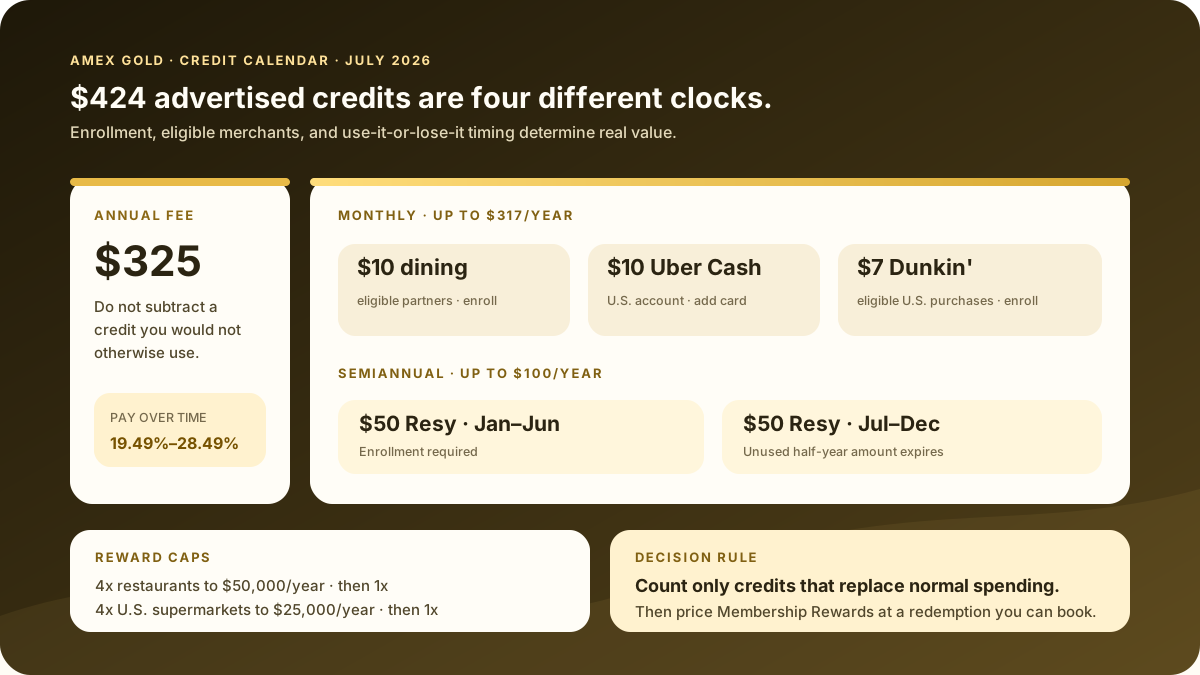
The current reward structure is 4x at restaurants worldwide on up to $50,000 per calendar year, then 1x; 4x at U.S. supermarkets on up to $25,000, then 1x; 5x on prepaid hotels through AmexTravel.com or the Amex Travel app; 3x on flights booked directly with airlines or through Amex Travel; 2x on prepaid car rentals and cruises through Amex Travel; and 1x on other eligible purchases.
| Review question | DollarScout finding |
|---|---|
| Best for | High restaurant and U.S. supermarket spenders who use Membership Rewards transfers |
| Annual fee | $325 |
| Current Pay Over Time APR | 19.49%–28.49% variable on eligible charges |
| Main strength | 4x food categories plus a broad transfer and benefits ecosystem |
| Main risk | $424 of headline credits is fragmented across merchants and use-by periods |
Rewards on restaurants and supermarkets
Rewards scores 4.9/5. Four points per dollar at restaurants worldwide is a leading permanent earn rate for a transferable-points card, and the current $50,000 annual cap is high enough for most households. U.S. supermarkets also earn 4x up to $25,000 annually. After either cap, the category earns 1x for the rest of the calendar year.
The definitions matter. A restaurant inside a hotel, casino, department store, event venue, food court, delivery platform, or other establishment may code according to the larger merchant or payment intermediary. U.S. supermarket earning does not mean every business selling food: superstores, warehouse clubs, convenience stores, meal-kit arrangements, and specialty shops can be coded differently under the terms.
A cardholder should review posted reward detail before building a permanent budget assumption. American Express does not control the merchant category information submitted through the payment network. Buying something that feels like “groceries” does not guarantee the supermarket code.
Travel earning and portal rules
The card now advertises 5x on prepaid hotels booked through Amex Travel, 3x on eligible airfare bought directly from airlines or through Amex Travel, and 2x on prepaid car rentals and cruises through Amex Travel. Those categories improve the card beyond food, but they are channel-specific.
Prepaid portal reservations can differ from paying the hotel, rental agency, or cruise line directly. Compare total price, taxes, cancellation rules, loyalty earnings, elite recognition, included insurance, and the party responsible for changes. A higher points multiplier is not compensation for a materially more expensive or restrictive booking.
The Hotel Collection can provide a $100 property credit on qualifying stays, generally with a two-night minimum and property-specific eligible charges. That is a per-stay hotel benefit, not a general annual statement credit that offsets the card fee.
The four headline credits
Benefits scores 4.8/5 because the card can return substantial value when its merchants fit the household.
- $120 dining credit: up to $10 in statement credits each month at the currently listed partners—Grubhub including Seamless, Buffalo Wild Wings, Five Guys, The Cheesecake Factory, and Wonder. Enrollment is required.
- $120 Uber Cash: $10 added each month after the card is linked to the U.S. Uber account. It can be used for U.S. rides or Uber Eats under the benefit rules when an Amex Card is selected for the transaction.
- $100 Resy credit: up to $50 from January through June and up to $50 from July through December at qualifying U.S. Resy restaurants. Enrollment is required.
- $84 Dunkin credit: up to $7 in statement credits each month at U.S. Dunkin locations after enrollment.
The theoretical total is $424. The economic total is what would otherwise have been spent in the same period at the same merchant. A person who buys one extra meal near month-end to avoid “losing” a $10 credit has not saved $10. Monthly value generally expires when unused, and a credit delayed across statement periods can complicate tracking.
Create a 12-row calendar and mark only habitual transactions. If realistic annual value is $250, the remaining net fee is $75 before points and protections. If realistic value is $80, the card starts $245 behind a no-fee alternative.
Annual fee and Additional Cards
Fees scores 3.8/5. The Basic Card costs $325. American Express currently lists the first five Additional Cards at $0 and the sixth or later Additional Card at $35 each. Additional cardholders can help earn rewards, but most statement credits and limits apply at the account level rather than multiplying for every user.
An annual-fee decision should compare the whole account, not just one category. Multiply expected eligible restaurant and supermarket spend by a conservative point value, subtract the rewards a no-fee alternative would earn, add only usable credits and protections, then subtract $325. Do not count a welcome offer as recurring year-two value.
Membership Rewards redemption
Membership Rewards points can be used for transfers, travel bookings, statement credits, gift cards, shopping, and other options. The value per point varies. Transfers to an airline or hotel program can be attractive when award availability and taxes work; cash-like redemptions can be lower. A high 4x earn rate does not guarantee a high-value redemption.
Transfer only after finding an available award and confirming the receiving program, name match, ratio, minimum, timing, taxes, and cancellation rules. Transfers are generally final, and the receiving loyalty program controls the points afterward. A speculative transfer can turn flexible points into an expiring balance with fewer uses.
For a cash-back household unwilling to learn transfer programs, compare the Gold Card against a no-fee or lower-fee card in actual dollars. “Four points” is not automatically “4%” unless the chosen redemption produces one cent per point after all costs.
Pay Over Time and Plan It
APR scores 3.5/5. Gold is a card with payment flexibility, not a traditional product where every charge is automatically revolved. Eligible charges can enter Pay Over Time up to the assigned limit, while other charges may remain due in full. The current Pay Over Time APR is 19.49%–28.49% variable. Plan It can divide eligible purchases of $100 or more into installments with a fixed plan fee.
Neither option improves reward economics. Interest or plan fees are financing costs. The CFPB explains that paying the full balance by the due date is generally how a consumer preserves a purchase grace period where the agreement provides one. A household carrying $3,000 at a rate near 25% can incur hundreds of dollars in annual interest—more than the maximum value of many credits.
Use the card only for purchases already funded. Set alerts for the statement balance and due date, and treat Pay Over Time as debt even when the interface frames it as flexibility.
Travel and purchase protections
The current benefit guide describes trip-delay insurance for a covered round trip delayed more than 12 hours, up to $300 per trip and two claims per eligible card in a 12-month period. It also describes purchase protection for eligible items accidentally damaged, stolen, or lost within 90 days, extended warranty on qualifying products, Global Assist coordination, and other benefits. The card has no foreign transaction fee.
These protections have coverage triggers, exclusions, limits, documentation requirements, and responsible insurers or administrators. Global Assist coordinates help but the cardmember pays third-party medical or legal costs. A rental benefit, trip delay benefit, and full travel medical policy solve different problems. Read the current guide before the event, not after a denied claim.
Application experience and eligibility
American Express currently describes an “apply with confidence” sequence in which an applicant can learn whether they are approved before choosing to accept; accepting may then affect the credit report. That reduces uncertainty but is not approval without underwriting, and the application terms shown to the individual control.
Welcome offers can be personalized and can include eligibility language based on prior American Express products, previous bonuses, account history, or other factors. Save the exact offer page before accepting. A large bonus does not justify purchases outside the normal budget, and returns can reduce qualifying spend.
Acceptance and overseas use
There is no foreign transaction fee, and restaurant earning applies worldwide when the transaction codes correctly. Acceptance can still vary by merchant and country. Carry a backup Visa or Mastercard rather than assuming every restaurant, transit kiosk, small business, or payment terminal will accept American Express.
The “U.S.” limitation on supermarkets and most statement-credit merchants remains important during international travel. Overseas grocery stores do not become 4x U.S. supermarkets, and U.S.-only Uber, Resy, Dunkin, and dining-credit rules should not be valued as global cash.
Customer service
Customer Service scores 4.5/5 based on the documented app, account tools, chat and phone access, fraud and dispute processes, benefit enrollment controls, and detailed public benefit material. We did not contact support, dispute a charge, request a retention offer, or file a claim, so this is not a measured promise that every case is resolved quickly.
Different problems go to different teams. Amex handles the account; a merchant controls its coding; Uber administers Uber Cash; a loyalty program controls transferred points; and an insurer or benefits administrator evaluates coverage. Save screenshots, receipts, enrollment confirmation, and chat transcripts.
Amex Gold versus alternatives
Choose Chase Sapphire Preferred when the priority is a lower fee, broader travel protections, a simple annual hotel credit, and Chase transfers. Choose Capital One Venture when a flat 2x rate on nearly all spending is preferable to food-category caps and a four-credit calendar.
A no-fee grocery or dining card can be better when credits would change behavior, Membership Rewards will be redeemed at weak values, or the household spends below the point where incremental rewards offset $325. Amex Gold is a high-engagement product, not the default answer for everyone who eats out.
Decision checklist
The Gold Card is a strong candidate when you:
- Pay every statement balance in full.
- Spend substantially at correctly coded restaurants and U.S. supermarkets.
- Already use enough listed dining, Uber, Resy, and Dunkin merchants to offset the fee.
- Understand Membership Rewards transfer and redemption values.
- Will track monthly, semiannual, and annual limits without extra spending.
It is easier to skip when simple cash back is preferred, merchant-specific credits feel like chores, most groceries come from superstores or clubs, or a 0% purchase offer is more valuable than food rewards.
Bottom line
American Express Gold earns 4.4/5. Its rewards and benefits are excellent: 4x food categories, improved travel earning, transferable points, purchase protections, and potentially $424 in recurring food-and-mobility credits. For the right household, those pieces can comfortably exceed a $325 fee.
The card loses ground on simplicity and financing. Credits arrive in small merchant-bound windows, category coding and caps require attention, and Pay Over Time interest can erase a year of rewards. Build the credit calendar before applying, price points at the redemption you will actually use, and carry a backup payment network when traveling.