Many products on this page are from partners who compensate us. This doesn't influence our ratings. Our opinions are our own.
Trading · Rankings
Best Futures Trading Platforms of 2026
By Sophie Brown, Senior Finance Editor
Updated Jul 19, 2026
Fact-checked Jul 19, 2026
11 min read
NinjaTrader ranks first among the five attached futures platforms for 2026 because its brokerage, desktop, web, mobile, simulation, Market Replay, automation, and plan pricing are designed around exchange-listed futures. Interactive Brokers ranks second for global futures markets, multi-asset portfolio risk, APIs, and competitive tiered commissions. TradeStation is third for charting, EasyLanguage, backtesting, and FuturesPlus. tastytrade is fourth for an approachable futures and futures-options workflow. Lightspeed is fifth because futures are available through specialist platform arrangements but are not the center of its current retail proposition.
DollarScout reviewed current official commission, exchange-fee, margin, platform, market-data, simulation, delivery, and regulatory materials on July 19, 2026. We did not open or fund futures accounts, place synchronized orders, compare fills, hold through first notice or delivery, trigger an intraday-margin change, or test liquidation. Futures are leveraged obligations; a low intraday margin or low per-contract commission does not cap the amount a customer can lose.
Free: $0/month and $0.39 Micro/$1.29 Standard per side; Monthly: $99 and $0.29/$0.99; Lifetime: $1,499 once and $0.09/$0.59, before exchange, clearing, and NFA fees
IBKR Lite offers eligible U.S. residents $0 U.S. exchange-listed stocks and ETFs; IBKR Pro stock pricing is fixed or tiered, and other products use separate global schedules
Eligible U.S. exchange-listed stock and ETF orders can start at $0; options, futures, sub-dollar, OTC, routed, data, and service charges follow separate tiered schedules
$0 stocks and ETFs; listed stock and ETF options $1 per contract to open with a $10 per-leg cap and $0 to close; futures and futures options use per-contract opening and closing charges
Volume schedules advertise stocks from $0.001 per share or $2 per trade and options from $0.20 per contract; minimums, routing, regulatory, platform, and data fees can apply
Platform Access
NinjaTrader Desktop, Web, and iOS/Android Mobile with simulation, charts, order entry, SuperDOM, and futures-focused analysis; desktop provides the deepest automation and customization
IBKR Desktop, Trader Workstation, Client Portal, IBKR Mobile, GlobalTrader, specialty apps, and TWS, Client Portal, Excel, and FIX APIs
TITAN X, TradeStation Desktop, web/HUB, iOS and Android apps, TradingView connectivity, and multi-asset developer APIs
Native desktop, browser, and iOS/Android platforms plus an API, with options analysis, charting, ladder trading, backtesting, and integrated education
Lightspeed Trader Pro, browser and mobile access, plus higher-minimum specialist platforms; Lightspeed Trader Pro lists a $130 monthly software charge reduced by eligible commissions
Market Focus
More than 100 futures contracts across CME Group, Eurex, ICE, and Coinbase Derivatives, with contract-specific permissions, margins, fees, and availability
Stocks, ETFs, options, futures, currencies, bonds, funds, metals, event contracts, and other products across more than 170 global markets
Active U.S. stock, ETF, option, futures, and futures-options trading with charting, scanning, backtesting, and automation
Options, stocks, ETFs, futures, futures options, cryptocurrency, forex, fixed-income access, and prediction markets under product-specific rules
Direct-access U.S. stocks and options for experienced high-volume traders; selected specialist platforms also support futures and professional workflows under separate terms
Standout feature
Purpose-built futures execution, charts, DOM, automation, and add-ons
Broad international futures, options, currency, and securities access
Deep charts, Matrix, EasyLanguage, scanners, APIs, and backtesting
Approachable futures and futures-options construction and visual risk
Active-trader support relationship and multiple professional platforms
Detailed reviews
In-depth look at every product on our list.
Best Overall · Editor's Choice
1
Ranked #1
NinjaTrader
★★★★⯨4.5/54.5
DollarScout rating
NIN
NinjaTrader
Best overall futures platform
NinjaTrader ranks first because its brokerage, desktop, web, mobile, DOM and order tools, automation, backtesting, live simulation, controllable feed, Market Replay, and plan pricing are organized around futures. Free, Monthly, and Lifetime commissions are quoted per side and still require exchange, clearing, NFA, market-data, inactivity, and other account fees.
Free: $0/month and $0.39 Micro/$1.29 Standard per side; Monthly: $99 and $0.29/$0.99; Lifetime: $1,499 once and $0.09/$0.59, before exchange, clearing, and NFA fees
Platform Access
NinjaTrader Desktop, Web, and iOS/Android Mobile with simulation, charts, order entry, SuperDOM, and futures-focused analysis; desktop provides the deepest automation and customization
Market Focus
More than 100 futures contracts across CME Group, Eurex, ICE, and Coinbase Derivatives, with contract-specific permissions, margins, fees, and availability
Standout features
Purpose-built futures execution, charts, DOM, automation, and add-ons
Live, synthetic, and accelerated historical simulation modes
Transparent Free, Monthly, and Lifetime per-side plan comparisons
DollarScout's take
NinjaTrader ranks first because its brokerage, desktop, web, mobile, DOM and order tools, automation, backtesting, live simulation, controllable feed, Market Replay, and plan pricing are organized around futures. Free, Monthly, and Lifetime commissions are quoted per side and still require exchange, clearing, NFA, market-data, inactivity, and other account fees.
Pros
✓Purpose-built futures execution, charts, DOM, automation, and add-ons
✓Live, synthetic, and accelerated historical simulation modes
✓Transparent Free, Monthly, and Lifetime per-side plan comparisons
Cons
✗Intraday margin can create dangerous leverage and is not maximum loss
✗Data, exchange, clearing, inactivity, and third-party add-ons layer on cost
Our pick for best global multi-asset futures platform
2
Ranked #2
Interactive Brokers
★★★★⯨4.7/54.7
DollarScout rating
IB
Interactive Brokers
Best global multi-asset futures platform
Interactive Brokers ranks second for global futures and futures-options access, APIs, advanced orders, multiple interfaces, and consolidated portfolio, currency, cash, and margin risk. Published U.S. commissions commonly range from $0.25 to $0.85 per contract before product-specific third-party fees. Permissions, symbols, sessions, currencies, data, and pricing make configuration demanding.
IBKR Lite offers eligible U.S. residents $0 U.S. exchange-listed stocks and ETFs; IBKR Pro stock pricing is fixed or tiered, and other products use separate global schedules
Platform Access
IBKR Desktop, Trader Workstation, Client Portal, IBKR Mobile, GlobalTrader, specialty apps, and TWS, Client Portal, Excel, and FIX APIs
Market Focus
Stocks, ETFs, options, futures, currencies, bonds, funds, metals, event contracts, and other products across more than 170 global markets
Standout features
Broad international futures, options, currency, and securities access
Competitive tiered commissions, APIs, advanced orders, and portfolio risk
PaperTrader supports many contracts and automated workflows
DollarScout's take
Interactive Brokers ranks second for global futures and futures-options access, APIs, advanced orders, multiple interfaces, and consolidated portfolio, currency, cash, and margin risk. Published U.S. commissions commonly range from $0.25 to $0.85 per contract before product-specific third-party fees. Permissions, symbols, sessions, currencies, data, and pricing make configuration demanding.
Pros
✓Broad international futures, options, currency, and securities access
✓Competitive tiered commissions, APIs, advanced orders, and portfolio risk
✓PaperTrader supports many contracts and automated workflows
Cons
✗Schedules, permissions, data, currencies, and TWS require expertise
✗Simulator cannot reproduce live queue, impact, or every order type
Our pick for best futures charting and systematic testing
3
Ranked #3
TradeStation
★★★★⯨4.4/54.4
DollarScout rating
TRA
TradeStation
Best futures charting and systematic testing
TradeStation ranks third because Matrix, charts, RadarScreen, EasyLanguage, APIs, historical testing, simulation, and FuturesPlus support rule-driven futures and futures-options workflows. Standard and promotional commissions, activity tiers, exchange and clearing fees, NFA charges, data, liquidation, and overnight costs must be modeled from the exact contract and long-run account schedule.
Eligible U.S. exchange-listed stock and ETF orders can start at $0; options, futures, sub-dollar, OTC, routed, data, and service charges follow separate tiered schedules
Platform Access
TITAN X, TradeStation Desktop, web/HUB, iOS and Android apps, TradingView connectivity, and multi-asset developer APIs
Market Focus
Active U.S. stock, ETF, option, futures, and futures-options trading with charting, scanning, backtesting, and automation
Standout features
Deep charts, Matrix, EasyLanguage, scanners, APIs, and backtesting
Published symbol-level exchange and clearing fee tables
Futures and futures-options simulation in a multi-asset ecosystem
DollarScout's take
TradeStation ranks third because Matrix, charts, RadarScreen, EasyLanguage, APIs, historical testing, simulation, and FuturesPlus support rule-driven futures and futures-options workflows. Standard and promotional commissions, activity tiers, exchange and clearing fees, NFA charges, data, liquidation, and overnight costs must be modeled from the exact contract and long-run account schedule.
Pros
✓Deep charts, Matrix, EasyLanguage, scanners, APIs, and backtesting
✓Published symbol-level exchange and clearing fee tables
✓Futures and futures-options simulation in a multi-asset ecosystem
Cons
✗Promotions and activity tiers can obscure long-run cost
✗Historical tests require careful rolls, slippage, fees, and overfitting controls
Our pick for best approachable futures-options workflow
4
Ranked #4
tastytrade
★★★★⯨4.6/54.6
DollarScout rating
TAS
tastytrade
Best approachable futures-options workflow
tastytrade ranks fourth for consistent curve, table, risk, and order-chain tools across futures and futures options. Published rates are $1 per standard futures side, $0.75 per micro side, $1.25 per standard futures-option side, and $0.75 per micro side before third-party fees. DOM, automation, simulation, and global breadth are narrower.
$0 stocks and ETFs; listed stock and ETF options $1 per contract to open with a $10 per-leg cap and $0 to close; futures and futures options use per-contract opening and closing charges
Platform Access
Native desktop, browser, and iOS/Android platforms plus an API, with options analysis, charting, ladder trading, backtesting, and integrated education
Market Focus
Options, stocks, ETFs, futures, futures options, cryptocurrency, forex, fixed-income access, and prediction markets under product-specific rules
Standout features
Approachable futures and futures-options construction and visual risk
Clear published standard, micro, and futures-option per-side rates
Education uses the same contract and strategy vocabulary as the platform
DollarScout's take
tastytrade ranks fourth for consistent curve, table, risk, and order-chain tools across futures and futures options. Published rates are $1 per standard futures side, $0.75 per micro side, $1.25 per standard futures-option side, and $0.75 per micro side before third-party fees. DOM, automation, simulation, and global breadth are narrower.
Pros
✓Approachable futures and futures-options construction and visual risk
✓Clear published standard, micro, and futures-option per-side rates
✓Education uses the same contract and strategy vocabulary as the platform
Cons
✗Less DOM customization, automation, and international breadth
✗No physical delivery and expiration policies require proactive position management
Our pick for best for an existing specialist relationship
5
Ranked #5
Lightspeed
★★★★⯨4.4/54.4
DollarScout rating
LIG
Lightspeed
Best for an existing specialist relationship
Lightspeed ranks fifth because its current retail proposition is centered on active equities and options, while a futures account depends on the specific platform, clearing relationship, data, commissions, minimums, margin, and delivery policy. It may fit an existing professional relationship, but a first-time futures customer gets a clearer self-contained workflow from the top four.
Volume schedules advertise stocks from $0.001 per share or $2 per trade and options from $0.20 per contract; minimums, routing, regulatory, platform, and data fees can apply
Platform Access
Lightspeed Trader Pro, browser and mobile access, plus higher-minimum specialist platforms; Lightspeed Trader Pro lists a $130 monthly software charge reduced by eligible commissions
Market Focus
Direct-access U.S. stocks and options for experienced high-volume traders; selected specialist platforms also support futures and professional workflows under separate terms
Standout features
Active-trader support relationship and multiple professional platforms
Futures positions can be incorporated into relevant intraday platform views
Potential fit for an existing multi-product professional customer
DollarScout's take
Lightspeed ranks fifth because its current retail proposition is centered on active equities and options, while a futures account depends on the specific platform, clearing relationship, data, commissions, minimums, margin, and delivery policy. It may fit an existing professional relationship, but a first-time futures customer gets a clearer self-contained workflow from the top four.
Pros
✓Active-trader support relationship and multiple professional platforms
✓Futures positions can be incorporated into relevant intraday platform views
✓Potential fit for an existing multi-product professional customer
Cons
✗Retail futures terms and workflow are less self-contained
✗Exact FCM, platform, data, margin, commissions, and delivery require confirmation
Prices, methodology, tradeoffs, and the workflow each service actually supports.
How we ranked futures platforms
The model weights Futures Workflow and Contract Coverage at 25%, Risk and Margin Controls at 20%, All-in Round-Trip Cost at 20%, Data, Charts, and Order Entry at 15%, Simulation and Strategy Testing at 10%, and Reliability, Support, and Records at 10%. We price commissions per side, then add exchange, clearing, NFA, data, platform, inactivity, routing, and product-specific charges.
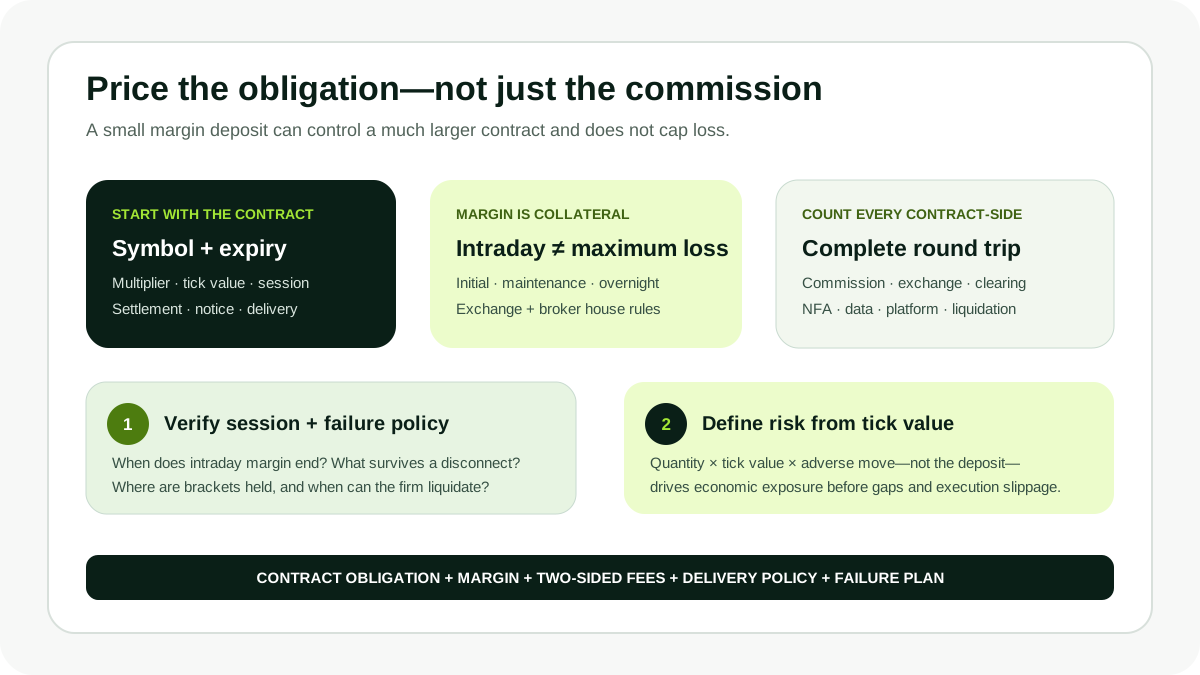
A futures quote and an intraday margin number are incomplete. Understand the contract obligation and calculate the full round trip before funding.
1. NinjaTrader — best overall futures platform
NinjaTrader ranks first because the product stack is purpose-built for futures. Desktop provides advanced charts, DOM and order entry, strategy automation, backtesting, custom indicators, multi-monitor workspaces, and a large add-on ecosystem. Web and mobile cover more portable execution. NinjaTrader Clearing is the FCM for the current U.S. brokerage pricing described on the official page, so the distinction between platform company and carrying firm is documented.
The plan ladder is explicit. Current U.S. rates are quoted per side: Free lists $0.39 per micro and $1.29 per standard contract; Monthly costs $99 and lists $0.29 per micro and $0.99 per standard; Lifetime costs $1,499 and lists $0.09 per micro and $0.59 per standard. A round trip doubles the commission, and scaling in or out creates additional sides. Exchange, clearing, NFA, market-data, inactivity, and other account fees are additional.
Simulation is unusually complete. Users can work with streaming live prices, a controllable simulated data feed, or Playback Connection using recorded tick data up to 1,000× speed and currently advertised history going back 90 days. Each answers a different question: live simulation tests current process, the synthetic feed stresses strategy logic, and replay compresses deliberate practice.
The important caveat is margin. Published intraday margin is a broker requirement that can change; it is not the contract's notional value, maximum loss, or overnight requirement. A position held into a different session or volatile event can require more capital. The exchange or broker can raise requirements, and the firm can liquidate according to its agreement.
NinjaTrader's add-on ecosystem adds flexibility and dependency. Check compatibility, support owner, data permissions, recurring fee, code access, and behavior after a platform upgrade. The platform wins for a futures specialist who wants the most coherent attached workflow, not because the smallest margin makes a trade safe.
2. Interactive Brokers — best global multi-asset futures platform
Interactive Brokers ranks second because it offers futures and futures options across many international market centers alongside securities, options, currencies, and portfolio risk. Trader Workstation, IBKR Desktop, mobile, APIs, advanced orders, and consolidated margin and cash views can support cross-asset hedging that a futures-only platform cannot.
Published U.S. futures commissions commonly range from $0.25 to $0.85 per contract depending on contract and monthly volume. The official schedule separately lists exchange, regulatory, and in some cases overnight-position fees. One current example for an ES contract shows an IBKR execution commission plus an exchange fee; the exact total varies by product. Spot-quoted and micro products can use different rate tables.
This is the strongest attached choice for a trader who needs global contract coverage, multiple currencies, APIs, or one portfolio view across futures and securities. It can also be operationally demanding. Permissions, fixed versus tiered pricing, data subscriptions, product symbols, currencies, margin, and exchange sessions must all be configured correctly.
PaperTrader supports many TWS instruments and API workflows but does not execute or clear. Some order types are unsupported and simulated fills cannot reproduce a live queue or market impact. Use it to verify contract selection, order states, cash and margin fields, and end-of-day statements.
Interactive Brokers ranks behind NinjaTrader because a dedicated U.S. futures trader may prefer NinjaTrader's DOM, replay, plan pricing, and add-on community. It ranks above the rest for global and multi-asset use.
3. TradeStation — best for futures charts, testing, and automation
TradeStation ranks third because EasyLanguage, Matrix, RadarScreen, historical testing, automation, APIs, and a multi-asset simulator support rule-driven futures work. Its current futures and futures-options pages emphasize platform access, real-time data packages, charting, and per-contract schedules. FuturesPlus adds a dedicated workflow for options on futures.
Current pricing is activity-tiered and promotions can temporarily reduce rates. The standard comparison must include the post-promotion per-side commission, exchange execution and clearing fee, NFA fee, market data, overnight or liquidation charges, and any platform or service fee. TradeStation publishes exchange-fee tables by symbol, which is more useful than a generic “plus fees” footnote.
Simulation supports futures and can use the same general tools as live trading. EasyLanguage makes historical and forward testing accessible, but backtests are sensitive to data selection, roll method, slippage, commissions, look-ahead bias, and overfitting. Continuous contracts used for charts are not necessarily the tradeable expiry, and a strategy must specify its roll policy.
TradeStation can be the better attached choice for a trader whose edge comes from custom signals and testing. It ranks third because NinjaTrader is more futures-native and Interactive Brokers has wider global and cross-asset reach.
4. tastytrade — best for an approachable futures-options workflow
tastytrade ranks fourth because its consistent options-first interface extends naturally to futures and options on futures. A trader can inspect curve and table views, construct defined-risk positions, monitor Greeks, and manage related orders without moving into an institutional-style terminal. Education explains contract mechanics using the platform's vocabulary.
Current pricing lists $1 per standard futures contract per side, $0.75 per micro futures contract per side, $1.25 per standard futures-option contract per side, and $0.75 per micro futures-option contract per side. Exchange, clearing, and regulatory fees apply. The provider says there are no ordinary platform, inactivity, or standard non-professional data fees, but product and account fees still require review.
Options on futures can expire into a futures position. Some underlying contracts can lead to physical-delivery obligations, and tastytrade states that it does not allow physical delivery. The platform or risk desk can therefore close or restrict positions under its policies before a customer expects. Review the exact product and expiration calendar.
tastytrade is less suitable for heavy automation, deep DOM customization, or maximum international futures breadth. It earns fourth for a self-directed derivatives trader who wants approachable construction and transparent published pricing.
5. Lightspeed — best only for an existing specialist arrangement
Lightspeed ranks fifth because its public retail proposition centers on active U.S. equities and options. Official materials say Lightspeed offers futures and can display combined intraday positions, but the relevant platform, FCM relationship, data, commissions, and minimums depend on the arrangement. A reader should not assume the Lightspeed Trader Pro equity experience or pricing automatically applies to futures.
This is potentially useful for a professional or active customer who already values the Lightspeed support relationship and can document the exact futures setup. It is not the cleanest first choice for a futures-only account when NinjaTrader, Interactive Brokers, and TradeStation publish more complete current futures workflows.
Request the commission and exchange schedule, clearing firm, platform fee, data packages, intraday and overnight margins, liquidation policy, supported exchanges, options-on-futures coverage, delivery policy, and statement format in writing. Without that package, a platform demo does not establish account economics.
Compare the attached futures platforms
Platform
Strongest futures fit
Published commission anchor
Simulation
Main limitation
NinjaTrader
Dedicated U.S. futures workflow
Free $0.39 micro / $1.29 standard per side; paid plans lower
Live, synthetic, replay
Specialist scope and layered add-ons
Interactive Brokers
Global and multi-asset futures
Common U.S. rates $0.25–$0.85 per contract
PaperTrader
Complex schedules and configuration
TradeStation
Charting, EasyLanguage, systematic work
Activity-tiered per-side rates
Multi-asset simulator and backtests
Promotions and all-in pricing need care
tastytrade
Futures and futures-options construction
$1 standard / $0.75 micro per side
Backtesting tools, not a full futures paper workflow
Less DOM, API, and global breadth
Lightspeed
Existing specialist or professional relationship
Arrangement-specific
Demo depends on platform
Retail futures terms are less self-contained
Calculate the real round trip
Start with contract symbol and expiry—not just the marketing name. Record multiplier, tick size, tick value, trading session, price limit, settlement, first notice, last trade, and delivery method. Then calculate entry commission plus exit commission, exchange and clearing charges on both sides, NFA fee, data, platform, inactivity, routing, and any overnight-position or liquidation fee.
For example, a published “$0.39 micro commission” is one side of one contract before third-party fees. A two-contract entry followed by two separate exits creates six contract-sides. The economic exposure depends on tick value and stop behavior, not the commission.
Compare margin separately. Initial, maintenance, intraday, and overnight values serve different purposes. A broker can impose house margin above the exchange level and change it with volatility or proximity to an event. Determine when intraday rates end and what happens if an order, data feed, or connection fails near that boundary.
Validate the contract and failure policy
The order checklist should include exact expiry, account, side, quantity, order type, limit or stop, time in force, attached orders, maximum risk, session, and delivery cutoff. Confirm whether bracket orders are held locally, at the broker, or at the exchange and what survives a disconnect.
Reconcile fills, commissions, exchange charges, open positions, cash, and variation margin every day. Save the statement and compare it with the platform. A simulated balance can reset; a real futures obligation cannot.
Frequently asked questions
What is the best futures platform in this list?
NinjaTrader ranks first for a dedicated futures workflow. Interactive Brokers is better for global market breadth or a combined futures-and-securities portfolio.
Does low intraday margin make futures safer or cheaper?
No. Margin is collateral, not maximum loss. Low intraday margin increases the amount of notional exposure a small account can control and can therefore magnify loss or liquidation risk.
Are futures commissions quoted round trip?
Often they are quoted per side. A round trip doubles the listed brokerage commission before exchange, clearing, NFA, data, and other fees. Read the schedule's unit carefully.
Is a micro contract always low risk?
It has a smaller multiplier than the corresponding standard contract, but multiple micros, volatile markets, gaps, or weak stops can still create material losses. Calculate tick value and total quantity.
Can I hold a futures contract through expiration?
Only after understanding the product, broker policy, last-trade and notice dates, settlement, and delivery. Brokers can liquidate or restrict positions before exchange deadlines. Some contracts can create physical obligations.
Bottom line
NinjaTrader is the best attached dedicated futures platform, Interactive Brokers is the global multi-asset leader, TradeStation is the systematic charting alternative, tastytrade is the approachable futures-options choice, and Lightspeed requires a documented specialist arrangement. Select by contract coverage, risk controls, total round-trip cost, and delivery policy—not by intraday margin alone.
Our methodology
How we scored every product on this list
Weighted Futures Workflow/Coverage 25%, Risk/Margin Controls 20%, All-in Round-Trip Cost 20%, Data/Charts/Order Entry 15%, Simulation/Testing 10%, and Reliability/Support/Records 10%. Official materials reviewed; no funded accounts, live fills, delivery holds, margin changes, or liquidation tests.
This review cycle used official product documentation, published methodology, current plan terms, and regulatory sources. Any hands-on or support-response testing is stated explicitly when performed. Read our fullmethodologyfor the complete scoring rubric.
DollarScout uses a privacy-friendly, cookie-less analytics script (Ahrefs) to understand traffic in aggregate. We don't sell your personal information and don't run ad trackers. You can review our Privacy Policy or opt out of data sharing any time.