Many products on this page are from partners who compensate us. This doesn't influence our ratings. Our opinions are our own.
How to Handle an IRS Audit
By Sophie Brown, Senior Finance Editor · Updated Jul 2026 · Fact-checked Jul 18, 2026
An IRS audit is a review of specific return information, not an automatic finding of wrongdoing. The first letter identifies the taxpayer, tax year, issues, response method, and deadline. A disciplined response verifies the notice through official channels, preserves the file, answers only the requested issues with organized evidence, and protects appeal and representation rights. This guide covers correspondence, office, and field examinations without substituting for case-specific legal advice.
Key takeaways
- The IRS says it initiates audits by mail; verify every notice using IRS.gov or independently sourced contact information.
- Identify the exact tax year, return, issue, deadline, and requested records before responding.
- Send organized copies and an explanation tied to each questioned item; retain originals and delivery proof.
- Do not sign an examination report, statute extension, or settlement you do not understand.
- Taxpayers have rights to information, representation, challenge, administrative appeal, privacy, and finality.
Verify that the contact is genuine
The IRS audit page says audits begin with a notice by mail, not an unsolicited phone call. Criminal investigators can follow different procedures, but a demand for immediate payment by gift card, cryptocurrency, wire, or threat of arrest is a scam warning.
Compare the notice number, tax year, taxpayer name, address, and contact instructions with the taxpayer’s IRS Individual or Business Online Account where available. Go directly to IRS.gov. If calling, use a number independently confirmed on an official page or the notice after verification.
Preserve the envelope, every page, fax cover, upload receipt, voicemail, and call log. Do not send Social Security numbers or return documents to an email address or upload portal that has not been verified.
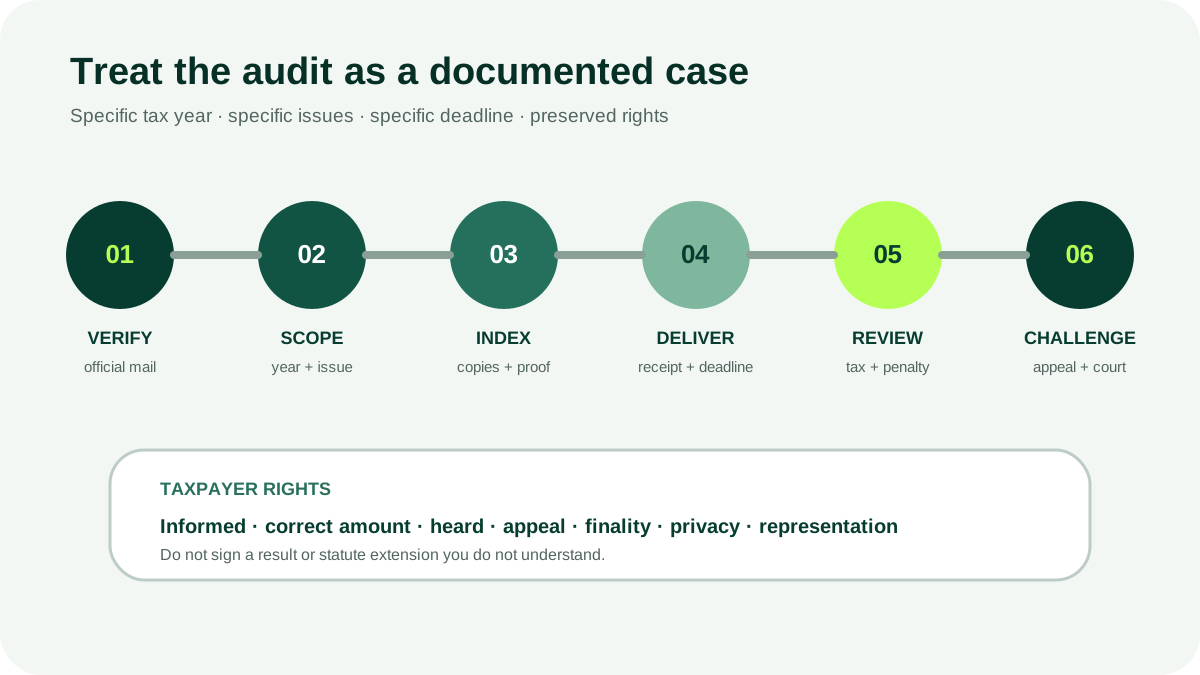
Decode the notice before sending documents
Create a case cover sheet:
- taxpayer and identification number ending;
- notice or letter number;
- tax year and return type;
- examination type;
- exact items questioned;
- response deadline and time zone;
- assigned unit, examiner, or contact;
- permitted delivery method;
- proposed tax, penalty, or change if stated;
- rights and referenced publications.
An information-matching notice is not always an audit, and a request for identity or credit documentation has its own process. Follow the specific letter. Do not mail a generic “audit package” that exposes unrelated information.
Understand the examination type
Correspondence examination
The IRS requests documents by mail or an approved electronic method for specified issues such as income, expenses, credits, or itemized deductions. This does not make the case simple: large attachments can be separated, and each page needs identifying information consistent with the notice instructions.
Office examination
The taxpayer or representative attends an IRS office interview and brings requested records. Confirm the agenda, period, attendees, and whether documents can be provided in advance.
Field examination
An examiner can review records at the taxpayer’s home, business, or representative’s office. Field cases can cover business systems, internal controls, assets, and multiple issues. Professional representation is often valuable.
The IRS can expand scope or years when facts support it. Ask for requests in writing and track every added item and deadline.
Preserve and reconstruct the return file
Obtain the filed return, schedules, worksheets, e-file acceptance, amendments, preparer workpapers, source forms, and prior correspondence. Download available IRS transcripts. Freeze routine document destruction for relevant records.
Reconcile the return line under review to its supporting ledger. If records are missing, reconstruct them from reliable third-party evidence such as bank statements, canceled checks, invoices, payroll records, contracts, mileage logs, medical records, or qualified acknowledgments. Label reconstructed schedules honestly; do not manufacture a contemporaneous log.
Keep originals. Provide readable copies unless the examiner specifically needs an original and a safe process is arranged. Store the working file encrypted and limit access.
Map each request to evidence
Build an index rather than sending a receipt pile.
| Request | Response structure |
|---|---|
| Reported income | Return line, payer forms, ledger, deposits, reconciliation |
| Business expense | Category, business purpose, invoice, payment, allocation, log |
| Dependency or credit | Relationship, residency, support, age, identity, required forms |
| Charitable deduction | Qualified organization, payment, acknowledgment, valuation forms |
| Basis or asset sale | Purchase, improvements, adjustments, sale, prior depreciation |
| Estimated payment | Date, amount, account proof, IRS or state transcript |
For every issue, write a short explanation with the rule position, calculation, and exhibit references. Distinguish facts from legal argument. If an amount was wrong, quantify the correction rather than hiding it.
Redact unrelated account numbers and personal information only when permitted and without making evidence unusable. Ask the assigned contact if uncertain.
Respond by the deadline
Follow the notice’s delivery method and format. If more time is needed, contact the examiner before the deadline, request a specific extension, and obtain written confirmation. A voicemail does not automatically extend a deadline.
Use trackable mail, authorized fax, or the specified secure upload. Retain:
- the exact response sent;
- exhibit index and page count;
- certified-mail or carrier receipt;
- fax transmission report or upload confirmation;
- delivery or receipt evidence;
- follow-up notes.
The IRS audit page warns that nonresponse can lead the IRS to complete the examination and issue proposed changes. Ignoring the letter does not preserve rights.
Communicate carefully
Answer truthfully and directly. Do not guess. If a question requires research, say you will confirm and follow up. Keep a log of date, participants, subjects, requests, deadlines, and commitments.
Ask the examiner to identify the authority and purpose of a request that appears unrelated. The Taxpayer Bill of Rights includes the rights to be informed, privacy, confidentiality, challenge, representation, and a fair system.
Do not volunteer broad access to personal cloud accounts or unrelated records. At the same time, do not conceal, alter, backdate, or destroy evidence. Potential fraud, criminal exposure, offshore reporting, payroll tax, or privilege questions require qualified tax counsel promptly.
Decide whether to use representation
Taxpayers can represent themselves or appoint an authorized representative. Representation can be especially useful when:
- records are incomplete or disputed;
- the case covers a business, rental, payroll, foreign, or entity issue;
- multiple years or large amounts are involved;
- the examiner requests an interview or site visit;
- penalties, fraud, or criminal concerns appear;
- legal privilege or statute questions matter;
- the taxpayer cannot manage deadlines or communication.
Enrolled agents, CPAs, and attorneys have different training and practice profiles but can have broad representation rights when authorized. Other preparers can have limited rights. Use Form 2848 or the appropriate authorization and verify credentials.
Low Income Taxpayer Clinics can assist qualifying taxpayers in disputes. The Taxpayer Advocate Service may help with significant hardship or unresolved process problems, but it does not replace timely compliance with a notice.
Review a statute-extension request independently
The IRS explains that audits generally cover recent years, with longer periods possible in specified circumstances. An examiner can ask the taxpayer to extend the assessment period. Signing may provide time to supply information or appeal, but also gives the IRS more time to assess.
The taxpayer does not have to agree automatically. Ask which year, tax, expiration date, and scope are covered; why the extension is requested; and whether a limited extension is appropriate. Get professional advice before signing. Refusal can cause the IRS to make a determination with the available information.
Evaluate the examination result
The IRS describes three broad conclusions:
- No change: the questioned items are substantiated and no adjustment results.
- Agreed: the taxpayer understands and accepts proposed changes.
- Disagreed: the taxpayer understands but contests some or all changes.
Recalculate each adjustment, interest, penalty, carryover, and state consequence. A federal change can require a state amended return. An adjustment to depreciation, basis, losses, or credit can affect future years even when the current dollar amount seems small.
Do not sign merely to end the conversation. Ask for the examination report, explanation, and rights. If agreeing, retain the signed documents and payment arrangement. Paying does not make records unnecessary.
Challenge or appeal a disagreement
The Taxpayer Bill of Rights includes the right to challenge the IRS position and be heard and the right to an independent administrative appeal of most decisions. The notice specifies the available process and deadline.
An effective protest identifies:
- each disputed adjustment;
- relevant facts;
- applicable law or authority;
- taxpayer analysis;
- supporting exhibits;
- requested resolution.
The IRS Independent Office of Appeals aims to resolve disputes without litigation. Small-case procedures, formal written protests, mediation, deficiency procedures, refund claims, and court deadlines differ. Missing a statutory deadline can remove an option, so obtain tax counsel quickly when a notice of deficiency or other time-sensitive determination arrives.
Close and retain the case
Obtain the closing letter or final result. Confirm account transcripts reflect agreed changes and payments. Update basis, depreciation, loss, credit, and other carryovers. Address required state returns and future-year positions consistently.
Retain the audit record beyond ordinary receipts when it affects later years or property basis. The file should show what the IRS requested, what was sent, what was decided, and how later returns were changed.
Bottom line
Handle an audit as a documented case with specific issues and deadlines. Verify the notice, preserve the return file, map requests to indexed evidence, prove delivery, use qualified representation where needed, and review every proposed change before agreeing. Calm organization protects more rights than either panic or avoidance.
Related content
Frequently asked questions
Sources
Related content
More from DollarScout on this topic.
