Chase Sapphire Preferred vs Amex Gold: 2026 Comparison


Chase Sapphire Preferred wins overall at 4.6/5 versus Amex Gold at 4.4/5 for most travelers. Its $95 annual fee, $100 annual Chase Travel hotel credit, broad 3x and 2x categories, primary rental coverage, and travel protections are easier to justify. Amex Gold can generate more value for households that naturally use 4x restaurant and U.S. supermarket rewards plus its $424 collection of dining, Uber, Resy, and Dunkin benefits. Choose Chase for lower-friction travel value; choose Amex only when its category spend and fragmented credits already match your routine.
Head-to-head
| Feature | Chase Sapphire Preferred | Amex Gold |
|---|---|---|
| DollarScout Rating | 4.6/5 ★ | 4.4/5 ★ |
| Annual Fee | $95 | $325 for the Basic Card; first five Additional Cards $0, then $35 each |
| Rewards | 5x Chase Travel; 3x dining, gas, EV charging, select vacation homes, eligible streaming, and online grocery; 2x other travel; 1x other purchases | 4x restaurants worldwide up to $50,000/year; 4x U.S. supermarkets up to $25,000/year; 5x prepaid hotels, 3x eligible flights, 2x prepaid car rentals and cruises through Amex Travel; terms apply |
| Purchase APR | 19.24%–27.49% variable APR, based on creditworthiness | 19.49%–28.49% variable APR on eligible Pay Over Time charges; other charges may be due in full |
Category-by-category breakdown
Rewards
TieFees
Winner: Chase Sapphire PreferredAPR
TieBenefits
TieCustomer Service
TieDetailed analysis
The short answer
Chase Sapphire Preferred is the better general travel card; Amex Gold is the better high-spend food card. DollarScout rates Chase 4.6/5 and Amex Gold 4.4/5. Both earn 4.9/5 for Rewards, but their economics are different.
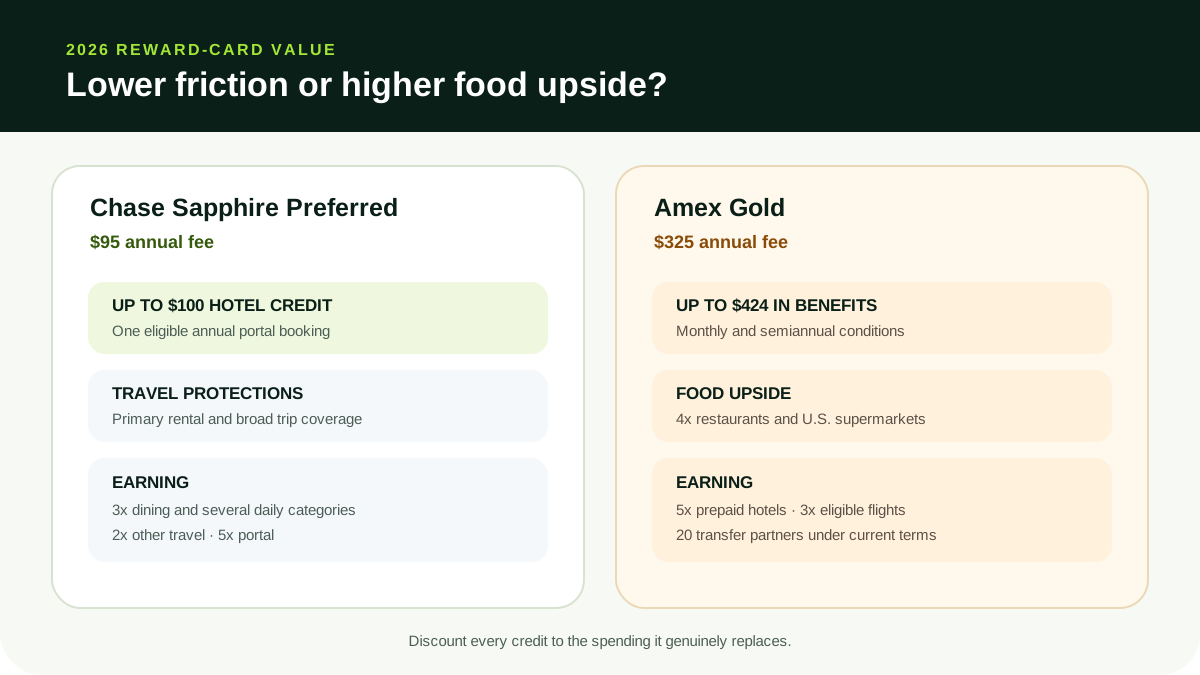
Chase charges $95 per year and now includes up to $100 annually for an eligible hotel booking through Chase Travel. Amex Gold charges $325 and offers up to $424 across four lifestyle benefits when every monthly or semiannual condition is met. A nominal credit is not worth face value unless it replaces spending that would have happened anyway.
| Decision factor | Chase Sapphire Preferred | Amex Gold |
|---|---|---|
| Annual fee | $95 | $325 |
| Core food earning | 3x dining and online grocery; terms apply | 4x restaurants worldwide up to $50,000 and U.S. supermarkets up to $25,000 |
| Travel earning | 5x Chase Travel; 2x other travel | 5x prepaid Amex Travel hotels; 3x eligible flights; 2x specified prepaid rentals and cruises |
| Published credits | Up to $100 Chase Travel hotel credit | Up to $120 Dining, $120 Uber Cash, $100 Resy, and $84 Dunkin |
| Transfer points | Airline and hotel partners; Hyatt changed to 4:3 for affected transfers | 20 airline and hotel partners under current terms |
| Foreign transaction fee | None | None |
Annual-fee break-even
Chase starts $230 ahead because its fee is $95 instead of $325. The annual Chase Travel hotel credit can offset up to $100 of an eligible booking, but only after comparing the portal's cash price, cancellation rules, hotel loyalty treatment, and direct-booking alternatives. Used naturally at an equal price, the credit can more than cover the fee.
Amex Gold publishes up to $424 in annual lifestyle value: $120 Dining Credit in $10 monthly pieces, $120 Uber Cash in $10 monthly pieces, $100 Resy Credit split into two half-year windows, and $84 Dunkin Credit in $7 monthly pieces. Enrollment and U.S. restrictions apply to several benefits.
The right model applies a personal utilization rate. If a household naturally uses $220 of those benefits without switching merchants or increasing orders, the remaining effective fee is $105. If it uses all $424, the nominal benefits exceed the fee. If it uses $80, the card still costs $245 before reward value.
Restaurant and grocery rewards
Amex Gold is designed for food spend. It earns 4 Membership Rewards points per dollar at restaurants worldwide on up to $50,000 per calendar year and 4x at U.S. supermarkets on up to $25,000. Purchases above each cap earn the ordinary rate under current terms.
Chase earns 3 Ultimate Rewards points per dollar on dining and online grocery purchases, subject to exclusions. Its June 2026 refresh also added 3x at gas stations, EV charging, eligible streaming, and select vacation-home purchases. Those additions make Chase broader even though Amex pays a higher food multiplier.
Merchant coding controls. A grocery order through a delivery platform, supermarket fuel station, bakery inside another store, meal kit, warehouse club, or overseas grocer can code outside the bonus. Compare actual statements rather than assuming every food purchase qualifies.
Travel earning
Chase earns 5x on eligible Chase Travel purchases and 2x on other travel. The broad travel definition can include airlines, hotels, transit, tolls, parking, and other qualifying merchants under the rewards agreement. Direct bookings at 2x preserve more supplier control than a portal reservation.
Amex Gold currently earns 5x on prepaid hotels through Amex Travel, 3x on flights booked directly with airlines or through Amex Travel, and 2x on prepaid car rentals through Amex Travel and cruises booked and paid through the portal. Other eligible purchases generally earn 1x.
The higher portal multiplier is not automatically better. Compare the total cash price, taxes, elite benefits, cancellation policy, customer-service chain, and points earned with the supplier. A 5x booking that costs more or removes hotel benefits can lose.
Point transfers after Chase's 2026 changes
Both programs can transfer points to airline and hotel partners, which is usually the most powerful but most complex redemption path. Availability, award pricing, taxes, surcharges, and transfer ratios can change.
Chase's June 2026 Sapphire Preferred refresh changed Hyatt transfers to 4 Hyatt points for every 3 Ultimate Rewards points for affected new-card terms, reducing a historically important 1:1 use. The anniversary points bonus was also removed for new applicants under the announced transition. Other partner ratios and promotional bonuses require current confirmation.
Amex advertises 20 airline and hotel transfer partners. Membership Rewards can be valuable for international premium-cabin awards, but speculative transfers are risky because they are generally irreversible. Search the exact award, confirm the operating carrier and fees, then transfer only what is needed.
Portal and cash-like redemptions
Chase Ultimate Rewards can be redeemed through Chase Travel, transferred, or used in other ways. Points Boost can increase value on selected eligible travel rather than every portal booking. Confirm the point price on the exact itinerary and compare with a direct cash booking.
Amex Pay with Points value depends on the redemption and booking. Gift cards, statement credits, travel, and transfers can produce different outcomes. A card earning 4x is not delivering 4% unless one point is actually redeemed for one cent; premium transfers can be worth more and weak cash-like uses less.
Use a conservative personal value based on redemptions you have completed, not an aspirational travel-blog figure. Subtract taxes, surcharges, positioning flights, portal price differences, and unused orphan points.
Travel protections
Chase has the stronger protection package for a $95 card. Its Guide to Benefits documents primary rental collision coverage under qualifying conditions, trip cancellation/interruption protection, baggage delay, trip delay, purchase protections, and other coverages with limits and exclusions.
Amex Gold offers travel and shopping protections under separate policies, including eligible rental, baggage, delay, purchase, and warranty benefits depending on the event and current terms. Coverage is not identical to Chase and does not replace travel insurance for every risk.
Read the policy before a loss. Pay with the eligible card as required, preserve receipts and carrier documents, notify the correct administrator, and meet the filing deadline. “Travel protection” is not a promise that every cancellation or rental damage is reimbursed.
APR and carrying balances
Neither card is suitable for revolving rewards spend. Chase currently advertises 19.24% to 27.49% variable purchase APR. Amex Gold advertises 19.49% to 28.49% variable APR on eligible Pay Over Time charges; charges outside that feature may be due in full.
A $3,000 balance at a 24% APR costs roughly $60 in interest in the first month before compounding and payments. That can erase months of category rewards. Pay the statement balance in full by the due date and preserve the grace period.
If a balance is already being carried, prioritize a lower-rate product or repayment plan. Welcome offers and points should not justify paying interest.
Acceptance and international use
Both cards have no foreign transaction fee. Visa acceptance for Chase is generally broader worldwide than American Express acceptance, particularly at smaller merchants. Amex acceptance has improved but should not be the only payment method on an international trip.
Carry a backup card from a different network and issuer, keep cash where appropriate, and set travel contact information. Dynamic currency conversion should usually be declined so the transaction remains in local currency and the card network performs the conversion.
Customer service and disputes
Amex scores 4.5/5 and Chase 4.4/5 for Customer Service. Amex's service reputation and integrated benefit enrollment can be useful, while Chase combines card service with the Chase Travel and benefit-administrator chain.
Service quality depends on the problem. Portal itinerary changes may involve both the portal and airline. Insurance claims go to a benefit administrator. A merchant dispute follows billing-rights rules and evidence requirements. Record dates, names, case numbers, documents, and promised actions.
Welcome offers
Offers change by applicant, channel, referral, and timing. Amex currently presents a variable offer that can be as high as a stated number after the required spend, with eligibility determined during the application flow. Chase also changes public and targeted offers.
Do not choose a long-term card based only on first-year value. Check prior-card and bonus eligibility, spending window, excluded transactions, annual fee, authorized-user rules, and whether the required spend would displace a better card or create debt.
A practical spending model
Consider a household with $12,000 annual restaurant spend, $10,000 U.S. supermarket spend, $6,000 broad travel, and $20,000 other purchases. Amex earns higher food points but only 1x on much of the uncategorized spend. Chase earns 3x dining/online grocery, 2x other travel, and 1x elsewhere, while charging less.
The correct result depends on how much grocery spend qualifies as online for Chase, how each point is redeemed, whether Amex credits are natural, and which travel bookings use a portal. Put those assumptions in a spreadsheet. If one assumption changes the winner, the decision is not robust enough yet.
Which one should you choose?
Choose Chase Sapphire Preferred when you want a manageable $95 fee, an easy-to-use annual hotel credit, broad travel and dining categories, primary rental coverage, and a travel card that works well internationally. Recheck the post-refresh transfer ratios before valuing points.
Choose Amex Gold when restaurant and U.S. supermarket spend is high, Membership Rewards partners fit specific redemptions, and the Dining, Uber, Resy, and Dunkin benefits replace existing spending. Track every window so credits do not expire unused.
Choose neither when a no-fee cash-back card produces better certain value or when any balance will revolve. Rewards are a discount on spending, not a reason to spend or borrow.
Final verdict
Chase wins for most travelers because its lower fee, hotel credit, broader acceptance, and protections create less breakage. Amex Gold can win decisively for the right food-heavy household, but only after discounting every credit and point to the value actually realized.
Which one is right for you?
- Best for Lower-friction travel value and protections: Chase Sapphire PreferredView Card Details
- Best for International acceptance and primary rental coverage: Chase Sapphire PreferredView Card Details
- Best for High restaurant and U.S. supermarket spend: Amex GoldView Card Details
- Best for Membership Rewards transfer strategy and natural lifestyle-credit use: Amex GoldView Card Details
Final verdict
Chase Sapphire Preferred is the better default 2026 card because its $95 fee, $100 hotel credit, broad travel categories, protections, and Visa acceptance are easier to monetize. Amex Gold is better only when high qualifying food spend, Membership Rewards transfers, and naturally used lifestyle credits overcome the $325 fee without changing behavior.
Frequently asked questions
Sources and verification
Scores and product facts come from the underlying DollarScout reviews and were checked against official provider documentation and regulatory resources on Jul 18, 2026.
- 1Chase Sapphire Preferred current offer and rates (opens in a new tab)
- 2Chase Sapphire Preferred benefits (opens in a new tab)
- 3Chase June 2026 Sapphire Preferred refresh (opens in a new tab)
- 4Chase Sapphire Preferred Guide to Benefits (opens in a new tab)
- 5Chase Sapphire Preferred rewards agreement (opens in a new tab)
- 6American Express Gold current offer and rewards (opens in a new tab)
- 7American Express Gold benefits (opens in a new tab)
- 8American Express Membership Rewards FAQ (opens in a new tab)
- 9American Express Gold fee and benefit explanation (opens in a new tab)
- 10American Express travel and shopping benefit policies (opens in a new tab)
- 11CFPB credit-card grace-period guidance (opens in a new tab)
- 12CFPB guidance on issuer term changes (opens in a new tab)
Related content
More from DollarScout on this topic.
