
Current product status
Marcus by Goldman Sachs does not offer new personal-loan applications. Goldman Sachs disclosed in 2023 that it was ceasing new Marcus unsecured-loan originations and later reported selling substantially all of the portfolio.
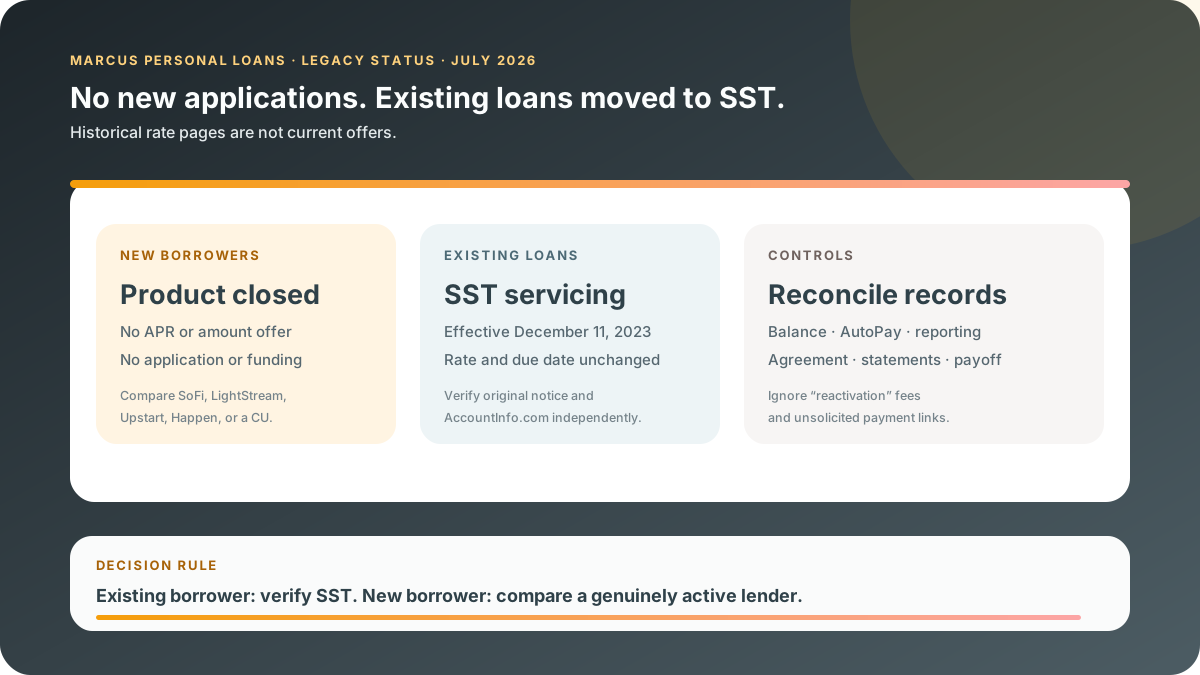
Existing Marcus Personal Loan and MarcusPay servicing transferred to Systems & Services Technologies, Inc. (SST) effective December 11, 2023. New borrowers should compare active lenders. Existing borrowers should use their original agreement, transfer notice, and authenticated SST account.
Why old Marcus terms are not current
Marcus launched personal loans in 2016 with a simple fixed-rate, no-fee proposition. Old pages still display historical APRs, amounts, rewards, and application calls to action.
Those details do not describe a product available in 2026. There is no current applicant APR, origination fee, amount range, approval process, or funding time. A comparison that treats a historic Marcus rate as live is misleading.
Marcus still operates deposit products such as savings accounts and CDs. An active banking site does not mean personal-loan originations resumed.
SST servicing transition
Marcus says the transfer did not change the existing loan's contractual interest rate or due date. It changed the servicer, portal, account number, payment destination, and credit-reporting administration.
SST identifies itself at AccountInfo.com as a loan servicer and displays NMLS 950746. Borrowers should reach it through their transfer notice or a verified independently typed URL, not an unsolicited message.
Inside the account, confirm principal, accrued interest, rate, next due date, AutoPay, payment history, contact information, and payoff procedure. Save the last Marcus statement, first SST statement, signed note, and transfer letter.
Payments and AutoPay
Current payments belong with SST or another servicer or collection agency identified through valid written notice. Do not send funds to an old Marcus destination merely because it appears in a saved browser bookmark.
Confirm that each debit posts before sending a replacement. A manual payment may not cancel AutoPay. For extra principal or payoff, obtain allocation instructions and retain confirmation.
Contact the servicer before a missed payment. Ask whether assistance exists, whether interest accrues, how long relief lasts, whether maturity changes, and how reporting will work.
Credit-report controls
Marcus reported account information before the transfer; SST reports afterward. The handoff itself did not create a hard inquiry. A new servicer name can appear for the same obligation.
Review all three reports through AnnualCreditReport.com. Check balance, payment history, opened date, and duplication. Dispute an error with the bureau and the furnisher using statements and bank records.
Scam prevention
A current offer to “apply for a Marcus personal loan” is stale or suspicious until verified through Goldman Sachs. Do not pay an upfront release fee, share a one-time code, install remote-access software, or send gift card or crypto payment.
Type official destinations independently. Verify the notice, account number, domain, and contact. New borrowers should never pay a broker to reactivate a Marcus application because no active application exists.
Where Marcus appears on DollarScout
DollarScout retains the brand page to document the closure and protect existing borrowers. The personal-loan review scores 1.9/5, with minimum scores for APR, amounts, and speed because no current product exists. No missing category is converted to zero.
Marcus should not appear as an eligible choice in current “best loan” rankings. Historical strengths can be described only with a clear legacy label.
Active alternatives
SoFi provides a soft rate check, $5,000 to $100,000 range, multiple terms, and Direct Pay. LightStream offers a no-origination-fee structure for strong-credit applicants but requires a hard application.
Upstart can add a broader-underwriting marketplace quote, while Happen and local credit unions can provide lower minimums, joint applications, direct creditor payments, or relationship pricing.
Compare active offers on equal cash received and payoff date. A replacement loan should reduce APR or create a sustainable repayment plan after every fee.
How to evaluate an active replacement
Start with soft-pull quotes where available and keep the requested net cash constant. Record APR, origination-fee dollars, proceeds, term, payment, total of payments, hard-inquiry point, funding conditions, and the actual creditor. A lender with a lower interest rate can cost more after a deducted fee or a longer term.
For debt consolidation, list every old balance, payoff quote, APR, and promotional expiration. Direct-to-creditor payment can reduce administrative mistakes but does not eliminate the need to check each zero balance. A lower required payment is useful only when it does not recreate expensive debt over a longer horizon.
Do not search for a “Marcus replacement application” or rely on an old comparison-page button. Navigate to an active lender independently and verify state availability before submitting identity or income documents.
Escalating a servicing problem
Document the account number, date, disputed amount, payment confirmation, statement, and every contact. Send a written notice to the address specified for disputes or notices in the current servicing materials. A phone call can begin the process, but a dated written record is easier to prove.
For credit-report errors, dispute with the bureau and the furnisher and attach copies rather than originals. For an unresolved servicing issue, the CFPB complaint channel can transmit the complaint to the company for a response. Continue paying undisputed amounts when possible; opening a complaint does not automatically pause contractual obligations or interest.
If a collector rather than SST contacts the borrower, request validation and independently verify the chain of servicing or ownership before paying. Never provide a one-time security code to an inbound caller.
Existing-borrower checklist
- Locate the Marcus-to-SST transfer notice.
- Verify AccountInfo.com independently.
- Confirm balance, rate, due date, and AutoPay.
- Reconcile every payment around the transfer.
- Review all three credit reports.
- Save servicing and payoff communications.
- Use the CFPB complaint channel if a documented error remains unresolved.
Editorial conclusion
Marcus Personal Loans is a legacy product, not a current recommendation. New borrowers should not compare old Marcus pricing with live lenders or submit information through an alleged application.
Existing borrowers should focus on verified SST servicing, accurate payment and credit records, and the original note. The correct user experience is a status warning and active alternatives—not an affiliate application button.