
What Splash Financial does
Splash Financial is a marketplace for student-loan refinancing, personal loans, and related credit products. Banks, credit unions, and other partners provide the final offers. Splash is not one uniform lender or servicer.
The same brand presents two materially different decisions. Student refinancing replaces education debt with a private loan. A personal loan provides general unsecured credit for permitted household uses. Their rates, fees, terms, and protections must be evaluated separately.
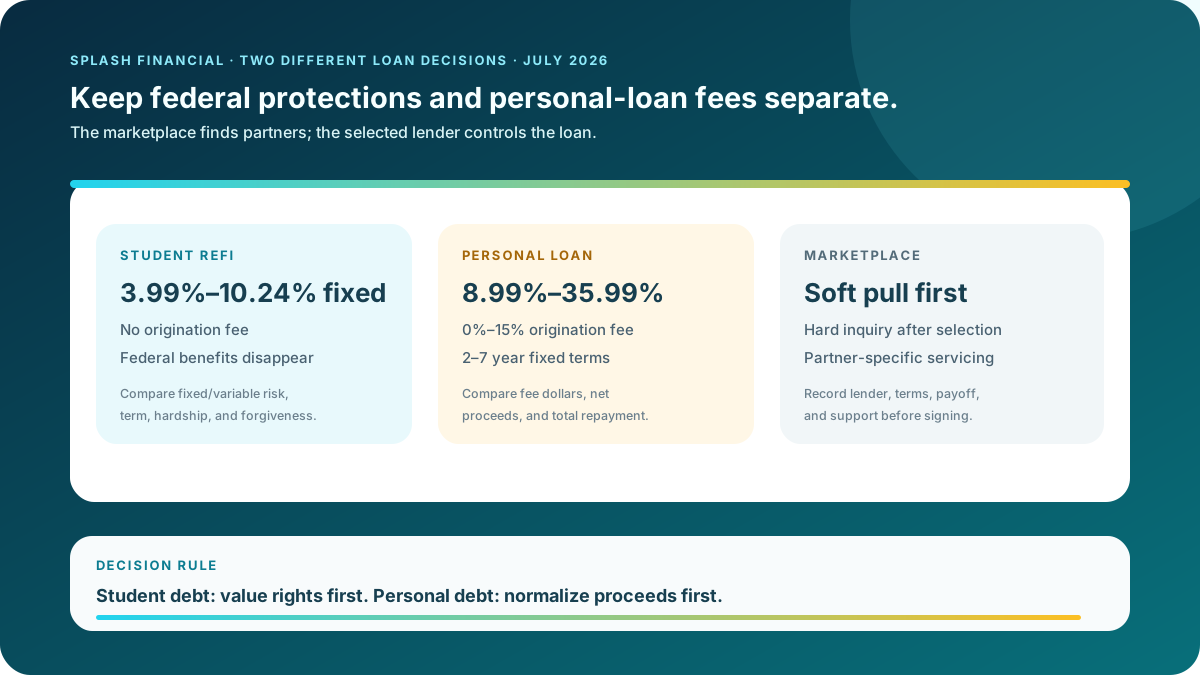
Student-loan refinance terms
Disclosures dated June 24, 2026 show fixed APRs from 3.99% to 10.24% and variable APRs from 4.74% to 10.24%. The lowest rate can include a 0.25-point AutoPay discount and the shortest term.
Fixed terms generally run five to 20 years; variable terms can extend to 25 years. A variable rate uses a margin plus a SOFR-based index and can increase. Model the payment at a higher rate before accepting.
Splash states that student refinance has no application or origination fee and no prepayment penalty. Amount limits depend on the partner and product. Keep paying old servicers until every payoff posts.
Federal benefits come first
Refinancing a federal student loan into a private loan permanently removes federal rights. Those can include income-driven repayment, approved deferment and forbearance, Public Service Loan Forgiveness, disability discharge, teacher forgiveness, and other relief.
A lower APR is not automatically worth that exchange. Value the federal options first. Refinancing private loans avoids this particular loss but still requires a review of cosigner release, hardship, death or disability discharge, rate type, and servicing.
Personal-loan marketplace terms
Splash's current personal-loan disclosures show 8.99% to 35.99% fixed APR, two- to seven-year terms, and a 0% to 15% origination fee that can reduce proceeds. Personal loans generally range from $1,000 to $50,000; some partners offer up to $100,000.
The disclosed illustration is a $10,000, 36-month loan at 17.98% APR with a 5% fee. The borrower receives $9,500 and pays about $343.33 per month.
Personal-loan proceeds cannot fund post-secondary education, a business, securities, real estate purchase or refinance, bridge financing, or illegal activity under the current restrictions.
Credit checks and verification
Prequalification uses a soft inquiry. Continuing with a final lender application causes a hard inquiry. Prequalified terms can change after income, identity, credit, degree, payoff, state, or membership verification.
Record the lender, APR, fixed or variable rate, amount, fee, proceeds, term, payment, total repayment, and servicer. Splash does not work with every lender and does not guarantee an offer.
Where Splash appears on DollarScout
DollarScout rates Splash 4.3/5 across APR, fees, amounts, speed, and service. The score rewards the comparison workflow and clean student-refinance fees while recognizing partner variation and possible personal-loan cost.
Comparisons should include direct lender offers and a “do not refinance” baseline for federal debt. A marketplace is valuable only when the final offer improves the borrower's actual position.
Timing and payoff
Approved personal-loan funds typically arrive in one to two business days, though some cases can take up to two weeks. Student-loan payoff can take three to 14 business days to reach and post at old servicers.
Continue every required payment until completion. Retain payoff quotes, disbursement records, old-servicer zero-balance statements, and the new agreement.
Support and hardship
Splash publishes weekday phone and email support plus product and application FAQs. After funding, the partner or designated servicer controls payments, hardship, deferment, forbearance, and disputes.
Private relief is lender-specific and does not recreate federal entitlements. Ask how interest, payment, maturity, and reporting change, and obtain the answer in writing.
Fixed versus variable refinance offers
A fixed rate keeps the contracted rate stable for the term; a variable rate can move with its index. Compare the current variable payment, the maximum or cap disclosed in the note, and at least two higher-rate scenarios. A small introductory advantage can disappear when the index rises, especially on a 15-, 20-, or 25-year term.
Term length is equally important. Extending repayment can lower the required payment while increasing lifetime interest and keeping the debt open much longer. Compare the total of payments for equal principal and include any expected extra payments. Do not use the shortest term if its payment would be fragile during a normal income interruption.
For a cosigned loan, inspect the release policy before signing: required payment count, credit review, income documentation, and any events that restart eligibility. “Cosigner release available” is not the same as automatic release.
Closing the old student loans correctly
Obtain current payoff quotes for every loan and note their expiration dates. Continue paying the old servicers until the refinance payments post and the accounts show zero balances. A payoff that arrives after the quote expires can leave residual interest; resolve it promptly rather than assuming the old account closed.
Keep the application, partner offer, new note, payoff directions, disbursement record, and zero-balance statements. Confirm the first due date, AutoPay discount, servicer, and rate type inside the authenticated account. If a federal loan was included unexpectedly, contact the new lender and Federal Student Aid immediately; private refinancing is generally irreversible once completed.
Recheck the first statement against the accepted disclosure. Confirm principal, rate, payment, term, and any discount. For a variable loan, note the index publication and the first possible adjustment date. These controls make later rate or servicing changes easier to recognize and document.
Decision checklist
Before a student refinance:
- Separate federal and private balances.
- Value every federal benefit that would disappear.
- Compare fixed and variable-rate stress cases.
- Check partner hardship and cosigner-release terms.
- Keep paying old servicers until zero balances post.
Before a personal loan:
- Convert the fee to dollars.
- Compare net proceeds and total repayment.
- Confirm the use is permitted.
- Identify the lender and servicer.
- Compare direct and credit-union offers.
Editorial conclusion
Splash can make rate shopping more efficient through one soft-pull intake and several partners. Its student-refinance fee structure is particularly clear.
The user must keep the two paths separate. Federal protections are often more valuable than a small rate reduction; personal-loan offers can carry a large deducted fee. The final partner disclosure—not the marketplace headline—decides whether the loan is worthwhile.