
What AARP is known for
AARP is a U.S. nonprofit, nonpartisan organization whose mission centers on helping people choose how they live as they age. Founded in 1958, it advocates on issues affecting adults age 50 and older and their families, including Social Security, Medicare, prescription-drug costs, caregiving, fraud prevention, financial security, and age discrimination. It also publishes practical information and operates programs, events, tools, rewards, and a paid membership.
The familiar name can create two misunderstandings. First, AARP membership is open to anyone age 18 or older, even though the organization’s mission and most of its expertise focus on the 50-plus population. Second, AARP is not the operating company behind every commercial benefit carrying its name. Many insurance, travel, dining, shopping, technology, and financial offers are supplied by unaffiliated providers under separate terms.
What the membership includes
The membership combines access to eligible member benefits with AARP The Magazine, AARP Bulletin, a free secondary membership for another adult in the household, digital and local resources, and enhanced participation in AARP Rewards. Benefits span travel, restaurants, shopping and groceries, gas and auto services, entertainment, technology, home services, work and finances, health and wellness, insurance, family caregiving, advocacy, events, and education.
Some AARP information, tools, games, events, and advocacy material are available without a paid membership. A shopper should therefore distinguish public or registered-user access from a genuinely member-only offer. The economic case for joining should rest on benefits and material the household expects to use, not on the total number of entries visible in the directory.
Current price and eligibility
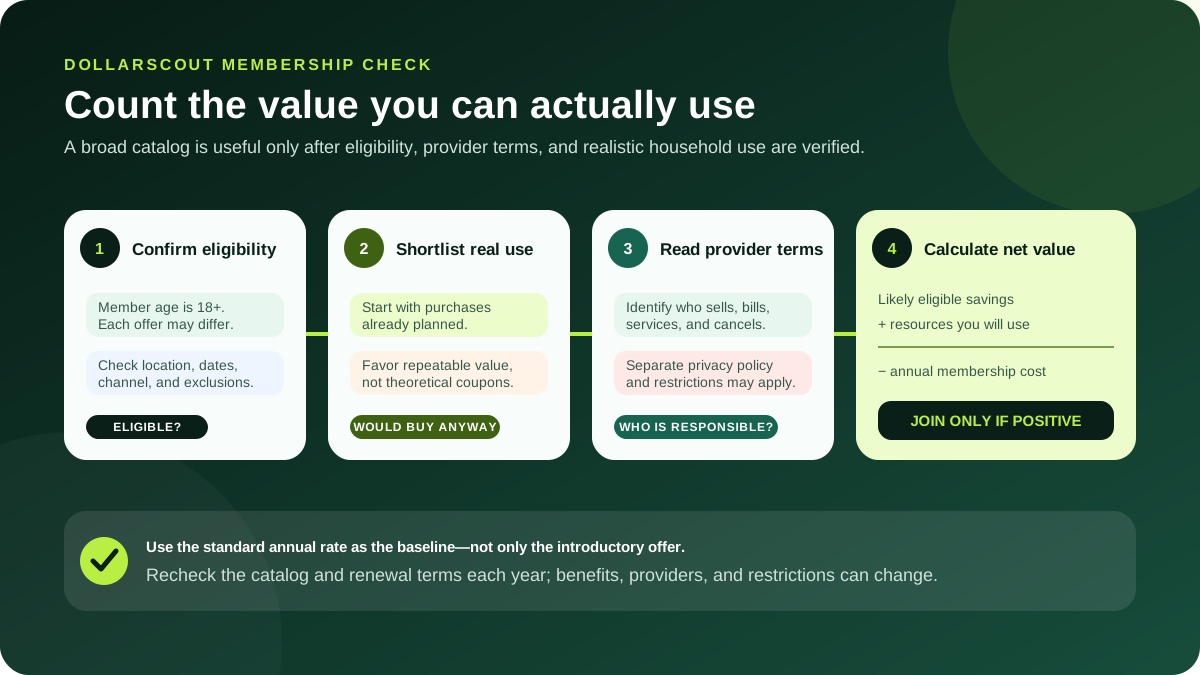
DollarScout verified a public offer of $15 for the first year with automatic renewal on July 19, 2026. AARP presented this against a $20 standard annual rate and also displayed multi-year choices. Promotions and enrollment pages can change, so the final checkout terms control the amount, renewal selection, and future billing.
The introductory price should not be presented as a permanent $15 annual fee. It is tied to automatic renewal. AARP’s membership FAQ says members receive a reminder before an automatic-renewal charge and provides account-management information. A member should keep the enrollment confirmation and set an independent calendar reminder before the next term.
Anyone 18 or older may join, but membership does not override individual benefit restrictions. An insurance product, local event, provider discount, health program, or financial offer can still have age, residency, underwriting, availability, channel, legal, or contractual conditions. Eligibility must be confirmed on the specific benefit page and provider site.
How to evaluate the benefits
AARP’s low standard rate makes it possible for one or two repeatable benefits to cover the membership cost. That possibility is not a guarantee. A nominal discount is worthless if the member would not have made the purchase, a public promotion is better, a designated booking portal charges more, or the offer cannot be used at the member’s location.
Start with existing household behavior. Search for the hotel groups, restaurants, wireless services, auto services, retailers, entertainment, travel, caregiving support, fraud resources, or research tools already likely to be used. Read the exclusions, compare the final price outside AARP, and count only savings that are reasonably repeatable. The included secondary household membership can improve value for two adults, but each benefit still controls who may redeem it and how often.
Non-cash value also matters. AARP’s publications, fraud education, caregiving guides, retirement and Social Security tools, webinars, local events, job material, and health information may be useful even when no discount is redeemed. These benefits are harder to price, so the member should identify which resources would replace another paid service or meaningfully improve a real decision.
Third-party providers and AARP’s role
AARP’s 2026 member-benefits guide discloses that some benefits are supplied by third parties rather than AARP or its affiliates. It also says some providers pay royalties for the use of AARP intellectual property and that the payments support AARP’s general purposes. AARP’s privacy site separately lists licensed service providers with which limited member information can be shared for contracted products, services, or discounts.
Those relationships deserve attention whenever the AARP name appears beside insurance, banking, credit cards, health products, travel, identity protection, wireless service, or another commercial offer. The provider—not the membership card—determines the product contract, actual price, licensing, underwriting, data use, service, claims, refunds, and cancellation process. AARP’s site warns users when they leave for an external provider because different privacy and service terms apply.
The correct due-diligence sequence is to identify the operating company, read its full terms, compare the total price, check eligibility, understand the information requested, and determine who owns a complaint or claim. The AARP relationship can explain access to an offer; it does not prove that the offer is the cheapest or best choice.
Publications, resources, and advocacy
AARP’s brand extends beyond member discounts. Its public mission covers nationwide and state advocacy, community work, information, and programs focused on aging. The organization publishes AARP The Magazine and AARP Bulletin and maintains substantial topic libraries for health, money, work, Social Security, Medicare, caregiving, fraud, travel, technology, home, and entertainment.
This broader role differentiates AARP from a narrow coupon club. A person may join partly to support or stay informed about policy work, use aging-related resources, or receive publications. Those motives should still be separated from claims of financial savings. Advocacy participation and trusted information can be valuable without producing a dollar-for-dollar return.
Privacy and account access
Members can use a digital card, print a card, request a physical card, manage account details, and add an eligible secondary household member. The AARP Now app combines a digital card with benefits, content, and local information. The website organizes offers into categories and provides a searchable directory.
Redemption can be less uniform because many benefits leave AARP’s platform. A member may need to show a card, use a code, register with a provider, book through a particular link, join a separate loyalty program, or call a designated number. Privacy choices made with AARP do not necessarily control information actively submitted to an outside provider. Read both privacy notices before applying for a product or entering sensitive personal information.
Where AARP appears on DollarScout
DollarScout’s AARP membership review evaluates the current price, eligibility, household access, benefit breadth, partner disclosures, documented support, and renewal considerations. The review uses a membership-specific scorecard rather than forcing AARP into brokerage, banking, insurance, or budgeting-app criteria.
That distinction prevents a misleading comparison. AARP should not receive a score for trading commissions, investment selection, bank syncing, insurance claims, or loan APR because it is not the direct product being assessed in those categories. Commercial benefits that lead to a bank, insurer, or other provider require their own product-level evaluation.
Editorial conclusion
AARP is a broad, inexpensive membership with particular relevance for adults 50-plus and caregivers, while remaining open to all adults. Its strongest advantages are the scale and variety of its benefits and resources, the free secondary household membership, and a standard annual price low enough to recover through modest repeat use.
The central limitation is structural: many commercial benefits change over time and are delivered by other companies. Join only after identifying likely uses, treat introductory automatic-renewal pricing carefully, and evaluate every partner product on its own terms. The membership can provide excellent value, but the AARP name should begin due diligence—not end it.